
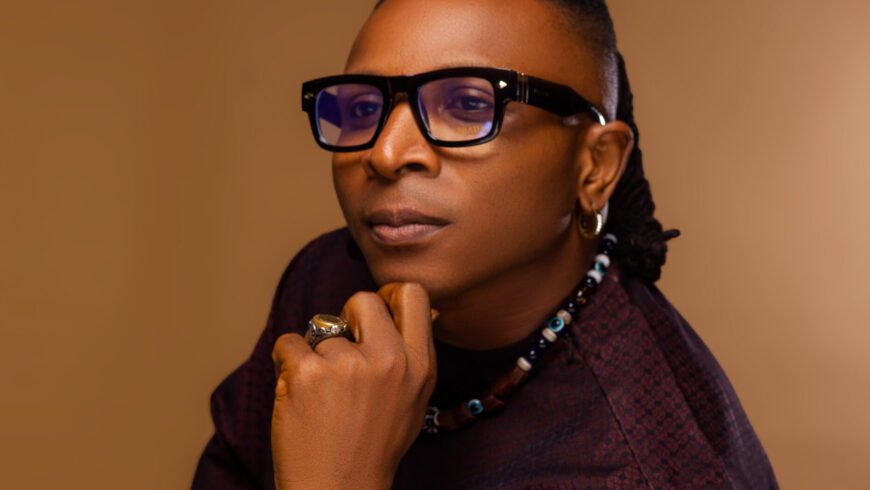
From Gombe to the Africa Shrine to the world stage, Bendancer embodies the spirit of defiance, fire, and redemption. Born Benjamin Daniel, Bendancer’s story is one of conviction against the odds.
From a northern Nigerian boy told that “dance wasn’t a real career,” to becoming the first male dancer in Made Kuti’s band and a fixture at the New Afrika Shrine and tours all over the world, his journey is proof that purpose can outgrow pain. For him, dance is not entertainment, it is worship, activism, storytelling, and healing. Whether performing before Paris dignitaries or teaching at Bendancer Academy International, his mission stays the same: to make the world feel alive again through movement, authenticity, and his God-given fire.
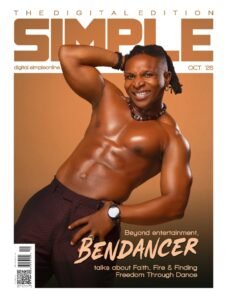
To begin, tell us who Benjamin Daniel is before Ben the dancer?
Growing up as a young child I had a great passion for dance, initially I wasn’t even called Bendancer I was called Don Ben. So growing up in a humble family in the North, I had amazing parent who were well rooted in the Christian home, as a young child my father wanted me to be a responsible man in the society, he wanted me to be a doctor or a lawyer but because I have great passion for dance I told my dad I want to be a dancer and that really didn’t sound well with him so he said to me if I don’t want to be a doctor or lawyer he was not going to further sponsor on my education and that really brought gap between me and my family but along the line I found solace in dance. Dance became the only things I have to run to, dance gave me peace, I find satisfaction in the dance and in that moment that was when I decided that if my father says dancers are wayward, that dancers are people who are not seen responsible in the society then I was going to do the right thing and take dance seriously and prove him wrong, this was Benjamin Daniel before Bendancer.
You grew up in Gombe and started dancing at age 10. Looking back, what first sparked your love for movement and rhythm?
What sparked that fire in me was for every time I dance, and I see people been inspired, dance was not just entertainment for me- dance was a spiritual exercise, it was a very essence of my expression and whenever I do that I see people filled with joy, it brings the very existence of the rhythm, so I do it with so much passion that if you are see me dance, you will also love it and desire to learn how to dance. For me that moment where it sparked that fire, is for every time I dance people are happy, people forget their sorrows and people are inspired to create their own ideas.
How did your family and community react when you were chose dance as your path?
At the begin it was a very hard one, at some point my style of dance was very difficult to understand because of the demography and the location I was, before now the social life of the North is nothing compared to what its today, back then it was not really accepted, people where wondering what type of dance is this because they know the break dance, the likes of the Michael Jackson and all of that but they are seeing someone who is doing something way more different and they were like what is this guy doing so it took me a lot but I stayed consistence and I didn’t allowed what they were saying get to me but looking back for what have become today I think it is a great inspiration for me and lot of young voices in the dance industries not just from the North or Nigeria but globally.
In those early years without much access to the Internet or mentors, what kept you pushing forward with your passion for dance?
To be very honest with you it was a very difficult one because in this era you could Google the names of the dancers, the style of the dancers, their origin and who were the sole pioneers and creators of those dances. Back in the days it was a very hard one to crack, my father was quite well to do when I was much younger so we had access to the television, the cassette back in the days. I get to watch the likes of Awilo Longomba, Fela and Michael Jackson, that was the only access I had but what I did was while I watching what they do I intend to create my own ideas from my head though sometimes I did know what I was doing but because of the passion that I have or the inspiration that I have, I believe that I could change the world with this dance and I kept pushing. It was a very difficult path for me starting but along the line I was able to find my path because for me dance is all about authenticity, as a creative you must have one thing that defines you. I found my niche and I held unto it.
“As a Creative you must have one thing that defines you.“
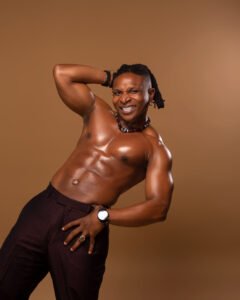
You’ve cited icons like Michael Jackson, P Square, Usher, Jeffrey Daniel, and Fela as influences which of them most shaped your style, and how do you make that style uniquely your own?
To be very honest each and every one of them play a very vital role, so in terms of activism and originality- Fela did because for me I have always wanted to use my dance as a tool for change that was what my drive was, for me to change a narrative and to be a leader in my own field. Looking at the life of Fela and it dearing spirit, it really pushed me to see that I can do anything if I set my mind to do and in terms of the dance aspect, looking at Michael Jackson and how great he has become just by being a dancer that really inspire me that I can take the world and every things that comes with it. Differently this artist has influenced me in the way I talk, dress and it has also influenced my choices in dances and the choice of music I dance to.
Do you remember the moment when dance stopped being just “fun” and you realized it could become a career?
Yes! I remember that very moment very clearly so before I even started professionally when I started young whenever I has being invited to a birthday party or school graduation they will spray me money so for me as a young child I didn’t know what it meant I was just excited but along the line when I advance in age I realised that I have to take care of myself like I said early it was a difficult thing to push through my education because my father wasn’t happy because of my choice of career, I now have to realise that am now by myself, I have to sponsor myself to school because I can’t be a drop out and also take care of my bills before I go for a show and when I’m back- so where will I run to and have taken this career part and that should suppose to pay my bills so at that moment it became done on me that this can be a profession, it depend on how I brand it and on how I package it. For everything you are selling there is a market for it only depends on how you position yourself to sell it to the right audience, so basically I started dancing professionally at the age of 15.
Moving to Lagos 2020 must have been a big leap. What challenges did you face starting afresh in such a competitive environment?
After the conquering the North not just Gombe, I have influenced a lot of dance movement across the Northern demography places like Kano, Gombe, Bauchi, Madiguri, Yola, Taraba, Jos, Abuja and having conquered this cities I felt there is a need to move to Lagos and create an impact because it always about positioning yourself for bigger things. Whatever is it that you are doing, you will desire to grow in that area so after being in those Northern area that I just mentioned I discover that I have been able to influence a change there I felt I need to learn more and I needed to be heard globally, Lagos been the center of commerce has really play a very vital role in terms of entertainment where creative can find expressions but when I came into Lagos it was a very tough one for me because I had no platform of myself, I wasn’t known here in Lagos so it was a difficult task for me to be able to bring up my crafts and project it out there. Fast-forward to where I am today. I’m grateful for the journey and the choice I have made so far.
How did you meet Made Kuti, can you walk us through that first conversation that led to joining made Kuti and the movement?
Meeting Made Kuti was really a life changing experience, what happened then was I was schooling in Benin Republic and at a point in time I was really down financially so I needed to come to Lagos to work on a couple of jobs then make some money and go back to school, in that moment I was really down and depressed- a friend of mine by name Obinna stays right very close to the shrine and I was staying with him at that moment so while in Obinna house I heard someone playing sax, a particular note and that note for me is was not just an ordinary note it was a spiritual because that note he was playing, the sax met me at the very lowest point of my life and I asked Obinna who is playing that and he said it from the shrine and I told him can we go to that very place the sounds is coming from and that was when we entered and he moved forward to introduce me to Made Kuti and that was the first time I ever saw Made Kuti in my life I said I heard you playing a deep and spiritual note and I really resonate with it cause at the moment of my life I think I needed that because I’m depressed so the next thing Made Kuti said was that are you a professional dancer and I said yes I’m a dance artist the next thing he said was come to the shrine on Wednesday which is the normal day we rehearse- when we came as rehearsal proceeded, so as a professional dancer I could easily create moves and choreography to the music at that moment and the next thing he said was that can you come to the shrine on Sunday we have a show and I remember I was the first and only dancer to be on the stage in his band so I danced the whole choreography for over 2hrs alone. Afterwards I told him the very first day after dancing with you my spirit really resonate with your music, would you allow me to be part of your band and he said “I have also like the way you dance and I will also be glad to have you in my band” and from that moment I became part of Made Kuti and Movement.
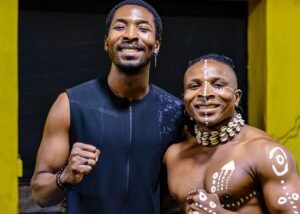
Becoming the first male dancer at The New Afrika Shrine, how did the audience receive you, and what does that moment mean for you personally?
For us generally in life, starting something new is not always smooth, for a moment people are asking a male dancer in the shrine, can he really do it – there was a lot of doubt but one thing Made Kuti said ‘he’s my dancer allow him.’ It was a difficult one, it took me a longer time and I proved myself. So being the first male dancer artist in the history of the Kuti’s is a great honor because this is a part a lot of legends have passed through and I’m so glad that I was given a platform to contribute to this great journey of Afrobeat, this great sound that’s globally accepted.
Dancing at the Shrine is more than just entertainment, its culture and activism. How do you see your role in that?
If you look at the journey of Fela himself what made it a lot easier was having a band by his side, for an Afrobeat musician who’s a professional in his field- he has different instrumentalists and their contributions are not how they play it but how passionately they play it. My own very contribution to this entire journey is how I am able to stay consistent and authentic to this God giving purpose in my life. For me it’s a great thing of honour to be on that path and I do it so passionately and fearlessly because for you to be an activist you must be fearless, you would speak the truth, sometimes it might not sound right or not be accepted but what matters is the truth and the truth is the ultimate, it never dies.
Afrobeat dance is often associated with female performers. How do you navigate that dynamic while carving out your own identity on stage?
Being the first male dancer for the Kuti’s, it goes down to the niche I have been able to carve for myself, as a dance artist in the band, we also have a dance choreographer who is a female artist so I do more of the storytelling and with that I have being able to blend with the female dancers and sometimes we do the choreography together because I’m a professional in my field I been able to know when to align with their dance, for us to come together to create what is unique, sometimes it can be challenging because you have to create something that is very authentic because Afrobeat is all about originality, sometimes it’s a little bit difficult but with the help of God and the inspiration from the holy spirit that guide my thought process and shaping what I have become today.
“Afrobeat is all about originality”
Dance for you isn’t just entertainment, you’ve described it as storytelling. Can you share an example of a performance where you felt your movement told a story words could never capture?
To be very honest, because of storytelling, you will have the picture of the word in your head because most of the time when I dance I do close my eyes, they are moments when I dance, I cry because some music, some sound speaks to me very deeply.
A man with so many scars, for me I cannot even say a particular moment but for every dance I do I put my life into it like is the last thing I have to do on earth, so there is never a defining moment but I will say the most historic performance that I did that I felt it was really deep to the larger audience was my performance with Made Kuti and the movement in Paris in 2022 at Fela Art Exhibition, that moment for me as a young man that has been aspiring to go global, I was dancing to dignitaries I will never thought of meeting in my life, it was a defining moment for me not just dancing to a setting crowd but people of different race, we had different people in different countries, different people around the world- having that performance was a great moment for me which I’m forever grateful for.

What message do you want the audience to take away from your performances?
For every time you see me dance, that is the creating power of God because sitting down creating something from nothing, sometimes my mind cannot phantom the moves I create, I don’t even know how I create them, sometimes when I’m dancing I wish I could leave my mortal body and watch my own very self dancing and feel what people feel. I want people to feel alive whenever I’m dancing, I want people to feel there sorrow away when I’m dancing, I want to get to a point I can dance the cripple can walk, I want to dance even a dead man can see Bendancer dancing, I want to live my life and know I have change the world positive.
You’ve performed at an iconic stage, which of those experiences felt most real for you?
It was my first performance at Felabration, the audience at Felabration is a different audience because Made Kuti will say if you can please the audience at Felabration you can please any crowd in the world, if you are not good they will not care about your status, they will yell at you or probably stone something and tell you to get off the stage and but when they like you they are very real one, so my first performance at Felabration was really an amazing one and second one was at Fela Exposition.
How has your career changed your personal life since gaining recognition?
My career has really changed my personal life and how I see myself because before now I was dancing for the money, eventually after finding my niche and my years of experience in the industry I have become role model have and icon to many people across the globe- this has helped change the way I see myself, the way I carry myself, the way I talk and I realize that whatever I say have great influence in the life of other people.
Who are the international artists or choreographers you dream of working with?
They are great people that I dream of working with, first I see Chris Brown as a great performer most of the time he doesn’t even dance because of money because looking at the achievement he has and the things he has achieved so far he still dance passionately, I look at Qudus Onikeku, he is one person I hold on to high esteem, I’m looking forward to work with Kaffy on a project, she is one person that has lived a life worthy of emulation- I wish to work with any person who put live and so many energy in what they do.
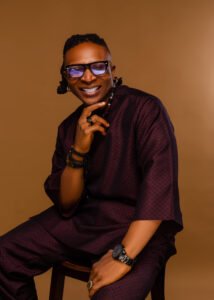
Tell us about Bendancer Academy International. What values and lessons do you want your students to carry beyond the dance floor?
Growing up I was dancing for passion, now I dance professionally to pay the bills. The major thing I want dancers to pick from Bendancer Academy International is that they need to understand that trend doesn’t sell but authenticity does, because you are looking forward to not just a dance people can just watch and forget about it, you are looking to create a dance that even the next generation they look back and want to emulate what you do, secondly we have to teach them the business aspect of dance because it is one thing to understand the craft and also it is one thing to understand the business side of the craft. At Bendancer Academy we prepare you for not just the craft beyond the floor, how you can negotiate contract, how you can prepare a production because those are the major things we look at because for us here back in Nigeria, it is so painful that we don’t have a functioning dance industries where we can have dance videographers, dance photographers, dance costumiers, dance script writers and they play a very vital role in the journey of this dancers, so what Bendancer Academy prepare you for is to give you the right dedication on how to brand yourself and how to position yourself so the global brand can see you and work with you. You know your job, you are not just doing it for the passion you are doing it professionally- we teach you different types of dance, their origins and where their originality from how far this dancing have gone in terms of the cultural impact globally.
Quick fun one, if you had to pick one song to dance to everyday for the rest of your life, what would it be and why?
If I was to choose a song to dance to, it would be ‘Story by Made Kuti ft. Femi Kuti’ and my reason is that when you listen to the lyrics of the song it transcends beyond what the first lyrics says with great power comes great responsibilities, are you better than the people that you judge? Are you better than the people that are corrupt? In that moment spiritually, you understand your power, physically you are being conscious because it will remind you of will you be honest if you are in a place of power. If I become greater, I will also think of my people whether a political leader, spiritual leader or place of organization and it also reflects my decision as a person.
On a lighter note, when you’re not dancing, what’s one hobby or guilty pleasure people would be surprised you enjoy?
If I am not dancing honestly I am in the gym but another thing I love to do that people don’t know about me is that I love to cook. Sometimes in the house I will just think of something then cook cause I have to stay healthy aside being a dancer I’m also a fitness instructor so most of the time I watch what I eat I don’t like eating out so I cook what I eat and make sure it is healthy.
What advice would you give to anyone who wants to follow your footsteps into professional dance?
Be authentic because most of the dance we re doing today like the Tiktok dance is a trend so what come with a trend is that it comes and it goes but once you are authentic, you will forever remain valid, like in the music industries we have song that has a replay value, they are songs that has been sang today that you won’t even remember them but when you hear CBB or Water no get enemy by Fela it can resonate with any generation, why because it has a replay value, as a dance artist you have to be original, so even after your gone people will make references with your dance.
Looking ahead, what’s your vision for Afrobeat dance in the next decade, and how do you see your role in shaping it?
Dance is getting a proper global acceptance and with the acceptance it’s going to be amazing, my own contribution is that we are not just training dancers because the photographer can find their place in the dance industry, we are working to create dancers behind the stage. We want to create an industry where dancers will be seen with a great value the same way a doctor will be regarded when they work into the room.
Watch full interview here:
Production Credit:
Photographed by Dare Yomi
Interviewed by Adetola Adebayo
Creative Director: Rayo Kasali
Executive Producer : Adedamola Edun