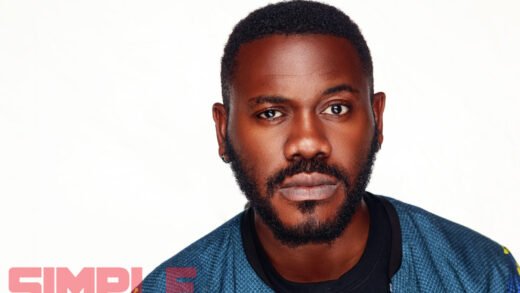

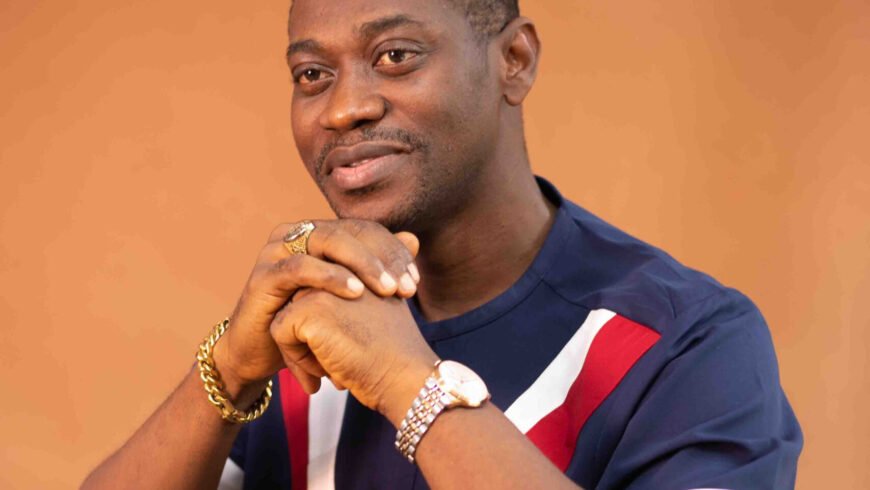
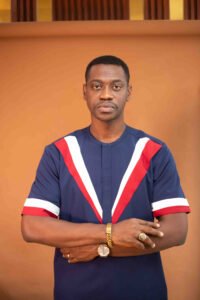
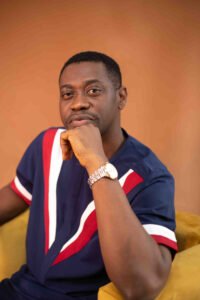
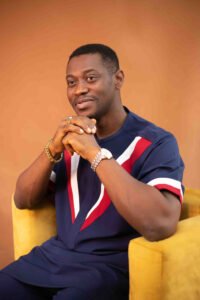
Lateef Adedimeji has for the last decade transformed into one of the most prominent Nigerian actors whose charismatic performances have captured the hearts of audiences both on screen and on stage.
With remarkable blend of talent, versatility and dedication, Adedimeji has carved a niche for himself in the Nigerian film folklore. His journey from humble beginnings to becoming a celebrated figure in the thespian verse, reflects his commitment to his craft and ability to breathe life into diverse characters. From his compelling role in the critically acclaimed movie “Mokalik” to his captivating performance in the popular TV series “SOMTO“, Lateef Adedimeji has proven his prowess time and again.
Weather through his dynamic portrayals in blockbuster films like the hugely biopic of Apala maestro Ayinla; the simple but compelling drama and the epic box office wave of the year; Jagun Jagun, his compelling presence in theatrical productions or his impactful contributions to Nigeria cinemas, Adedimeji is arguably the most charismatic and versatile actor in the Neo-Nollywood universe and he continues to leave an indelible mark on the landscape of Nigerian entertainment.
In this exclusive interview with Moses Adeyemo, he spoke on the Jagun Jagun milestone and his versatility.
Excerpt:

Tell us about your background up to your present self?
Lateef Adedimeji is the name; I’m an Egba man from Gbagura in Ogun State. I was born in Oshodi, Lagos; I attended Central Primary School in Bolade, Oshodi. After a while my family had to leave Oshodi and move to Isolo due to the situation of things at the time, and I had to finish my primary education at Ire-Akari Primary School in Isolo, from there to Ilamoye Grammar School in Okota. From JSS3 in secondary school I joined a Non Governmental Organization and that was the start of the whole journey of being an actor, those were the people that trained and shaped me into a peer counsellor, peer educator and an actor. I later attended Olabisi Onabanjo University, where I studied Mass Communication, and it is what it is today.
Would you say life made you an actor or it’s a decision you actively made?
I have always wanted to be a lawyer, but after the training we got from the Non Governmental Organization, where we were taught to use stage performance (dance and drama) to pass sexual education messages to the society, I decided I was going to develop myself in acting and push forward with it.
Will you consider yourself a character actor or a method actor?
I am more of a method actor. I pay close attention to details, nothing passes by me, for everything I see or experience I try to take something from it, even when I see a mad man passing, I try to watch and learn something because I know one day I might have to play the role. Every night there is this exercise I do, where I lay flat on my back and run through everything I did throughout the day, I look for things I need to review or do better, I dissect it and once done I go to bed. With this exercise I have been able to build a lot of character, I find it easy when given a role as I just have to go into my archives and look into what I have built before that has a similarity with the role that I am given then I just completely enter that character.
How do you separate yourself from a character that has elements of your personal experience?
For every actor, whatever role you are given and you are able to play it well, even if it’s not you, it simply means you have an element of it in you.
It can be difficult because for an actor you can only be successful if people can differentiate you from the character you are playing, and to avoid them seeing the same ‘you’ in different films. If I am given a role that has total similarity with me it’s always difficult but I try as much as possible to make sure that 80% of me is not in it, so people can see the clear difference between me acting the role and my personality.
“We need to start telling our own cultural stories, the world wants to see and know about our history and heritage.”
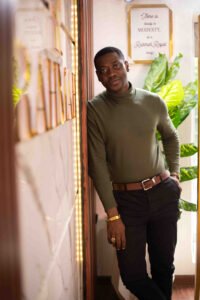
What are your thoughts on actors getting typecasted?
It’s so wrong. It’s not the fault of the person calling you for the same set of roles all the time; it is the job of the actor to make sure they see you beyond what they think is your strength. It is very easy to fall into the loop of typecasting, if you do not take yourself out of that box, it is what you will always get.
At the time I started, I had a strong resemblance with boss Odunlade Adekola, and I love him so much but as an actor it was a problem for me. People had to use my resemblance to him to mention me, and it was a problem for me as an actor because people were not recognizing me for who I am but through a link. I had to consciously sit down, watched a lot of movies by Odunlade Adekola, and a lot of my mentors, and started developing things for myself. At the time I started with crying, if I was given a scene that requires me to shed a bit of tears I would mount emotions on it and cry like my life depended on it, and at a point people started to use the tear shedding to describe me – I was satisfied because it meant I was getting to stand out for who I am.
I continued in that line and further distinguished myself when I picked up Igbo-tongue and did comedy. Essentially, I try to build on different things, even if you are not called to do such, do it on your own and put out on social media where actors and directors will get the chance to see what you can do, because it is the job of the actor to show the world what they can do.
Who were your thespian role models early on in your career and who are those influencing your artistic expressions today?
I have loads of people that I watch. Majorly for me, when I watch a film, I pay attention and study the actors in the movie, because in as much as I don’t want to be like anybody but me, being a better actor means I have to watch and learn from those that have been successful actors.
I will watch a Odunlade Adekola, Femi Adebayo, Ibrahim Chatta, pick the things I love, build on it and infuse it into my own acting. Some other actors that I have learnt a lot from are Antar Laniyan, Muyiwa Ademola, Adebayo Tijani and other successful actors.
Asides acting, what other aspects of film are you interested in?
Directing and producing because apart from being an actor, one has to learn the money making of the film industry, so you don’t just be the actor all of the time. The money making aspects entails you being a producer and not use your name, give people money to produce, use their name and get your return on investment. The business part of the film industry is what I am just testing out, because when you act in a film and it goes on to be a very big success, you have been paid your part and nothing else will be added no matter how big the film gets.
I am also working on my film academy which should have started a long time ago because people always come to me asking for an academy, and I always tell them I am still learning and looking for ways to succeed at the time, but now, I think I have a little that I can give back to the people, the academy will be starting in no time, just a few people yearly, like 15, so I can focus and push them to a reasonable extent. I also know the whole 15 can’t be actors, so when they come to me, I will test you in every ground, assess your strength and recommend accordingly.
What are your thoughts on actors in Nollywood directing a movie and still playing a lead role, and directors or actors also casting actors only from their own academy?
It depends on the strength you believe you possess to be the producer while still being the lead actor, if your strength is enough to do it then it’s fine, but I am sure you can not be the only person directing and playing the lead, because at the time you are on set, you can not see yourself as an actor, you will need an assistant. Somebody else must notice what you do on-set, it doesn’t matter how good you think you are you will need someone else. If I want to do such and I know I will be playing the lead, I won’t be the main director, I might assist when I am not on-set.
On people using actors from their academy, it is good to use people around you, give them a platform to showcase themselves, but I am one actor that will not joke with casting, because there is this power in casting and a story, a story might not be so good but when the cast is right, it will look perfect. You must be sure that the actor can carry the role well, and if he cannot, then get someone who can carry the role well, either from your academy or not. It is not about trying to promote an actor, even if it is clear that they cannot carry the role, I will rather give you a role that compliments your strengths, otherwise I am setting you up for failure because people will see the flop.
The statement that ‘we are all actors in the film of life’ how valid is this statement in relation to acting talent and hard work?
Yes we are all actors; even God Himself is an actor, the best. He is also a good director, with top notch and incomparable directing skills.
Every human being is an actor some just rooks it as a profession and every other person just works on the street. Hard work is good when it comes to talent, but work smart, because you can be working hard on what is not your strength, when you work smart, you will build on what is your strength. For an actor, you must first be known for something before jumping into so many gigs, there must be a mark of you that before they go into some other things that you do they will pick on that thing first, and that is what you should build on. Build on it; let people know you for it, then start shedding from it, little by little, to building up some other things.
Using Mr Macaroni as an example, you will see Debo playing different roles, but the Daddy WA concept has never been taken away from him because they was the first brand thing that he keyed into and people know him for it and after that he started showing other sides that he can do.
Overacting which can be used to great effect in films seem to be overdosed by so many actors, at what point does a professional actor utilize it without appearing to be overboard?
We all fall victim of overacting at times, I try to avoid it, what causes it most of the time is the fact that an actor will always try to overshadow or override the next actor, and it is a major problem. I tell people and co-actors never see your co-actor, as a competitor when you are both on set, the minute you put it is your head that this person is my competitor, you will want to overdo to overshadow that person. To you, you may be doing it well but the audience will notice it that you are overacting, because in the long run when they watch the film and try to understand your character, and the one or two scenes that you did isn’t showing some of the similarities or characterization of the character you are playing, they will sense overacting in it. Majorly understand your character, and play it the best way you can without seeing your co-actor as a competitor.
I don’t think overacting is necessary at any point, only thing you can do is blow up the character that you are doing if it’s not up to the grade that the director wants it to be, they will rather tell you to blow it up than overact. There is a thin line between playing you and overacting, you may not notice it when you cross it.
Do you think actors of old with a lot of stage acting background hold greater advantage in terms of skill and finesse compared to modern actors in Nollywood and why?
Stage is the king of everything, maybe because I am trained on stage, there is this discipline, and one takes thing you have with stage actors because there is no mistake on the stage, you can’t make a mistake on stage and think they will cut. Because if you make a mistake and you allow it to rub off on the production or scene you are playing it becomes a big problem, which is why they always tell us on stage that you must know your lines and that of your co-actor, so if he misses his line you will remind him of his line that he misses and you will pick it back and you guys go on. The show must go on is the language of stage, they will tell you every mistake on stage must be a blessing, which will only happen if you the actors are professional enough to spot mistakes and help each other out and leave the stage gracefully. These things cannot be learnt onscreen only on-stage, on-screen does a lot of good to people with the availability of stopping the camera, making edits, while stage is one stretch all the way down. I believe stage actors are always very creative.
There’s a strong believe that Nigerian filmmakers are heavily reliant on humour and comedy to sell their stories, what’s your perspective?
It depends on what you are looking at and the target audience – we know the situation of the country, no matter how serious the story will be, some audience will not watch if they don’t see some elements of comedy, it is better for you as a producer to rather have the combination of everything in one movie so it can cut across very audience. That is what Nigerian movie producers do, no matter how strong a story is, they put an element of comedy in it because everybody have their chosen interest in one actor or the other, be it comedy or action, I will rather bring all of them and put together in a film, so that I will have enough audience to watch the film and earn my money back, rather than put some certain set of people who are limited to a certain fan base.
Why not bring everybody together and give them different things that suit their strength while still making sure the story still passes its message across to the people. A combination of all of this is necessary for a Nigerian story to be successful.
You’ve been in a lot of comedy dramas, you’ve also been in a landmark biopic, Ayinla and now you recently did an Epic war film, Jagun Jagun that required a lot of fight scenes, what are your favourite parts of acting these different genres?
Ayinla is still my favourite because I am not a fan of that genre of his music, I did not know who Ayinla Omowura was until I was called for that movie. When I read the script I loved it, I did not know there will be a lot of music until I met the director, Tunde Kelani, and he was explaining who Ayinla Omowura was and the fact that I was going to be singing, which was shocking at the time. It was also not a thing I was just going to lip-sync, I had to learn the songs. They brought the band from Benin Republic, the man is called ‘Ayinla of Benin’, and he majorly sings all of Ayinla’s songs. When on-set and I’m singing and I miss a line he was always there to put me back on track. It was a lot; it’s one of the most challenging films I have acted.
For Jagun Jagun, it was also challenging because it was the first war film I did. At first I wasn’t going to take the job but I later warmed up to the idea of the challenge. I did not train in Nigeria, because for me as an actor I don’t believe in building up my physique all the way because I know I have comedy and a lot of things in me, and if I stick to a particular physique it can affect me getting some other roles. So, I just build up for whatever role I am picking up, and for Jagun Jagun as the character had to be muscular I worked on gaining muscles, and after Jagun Jagun, the next role I played was a comic one, with the character being a carefree person, I stopped muscle building and reduced the ones I gained and picked up the role.
“Stage is king of everything, because there’s no mistake on stage- the sh0w must go on.”
How exciting were the stunts in Jagun Jagun?
It was tough, because the stunts were real, there were stuntmen that could have played it but I am not that actor. If a stuntman had done all of the stunts for me I would not be proud of myself, even when I had an injury to my leg I decided against using a stuntman because that is the joy for me as an actor. I loved the fact that I was able to do all of it, it was painful, stressful, but it was worth it. I dislocated my leg on the first set of action and at the time I didn’t not see it as something serious until the third day when it started to swell. They had to call a physician to fix it, and bandaged it, the leg was that way all through my time on set, but the show must go on, that is the stage strength that I had to bring back. Naturally after the injury I would have pulled out, but with the money spent, the level of training I went through we had to do it and I am glad it came out really nice.
What genres of films would you love to be produced more in Nollywood?
Epic. Because I feel we lost it a long time ago, and now that we are going back to it, we are beginning to get it back. We see Indian films, they speak their language, do their stories, and even though we don’t understand the language we watch it to the end, same for the Chinese. Their country has never been that terrible because they upgrade their own and carry their own well. Until we start telling our own stories, be it Igbo, Hausa, or Yoruba; let’s tell our own cultural stories. The world also wants to see, they want to know about our history and heritage, and we can see them appreciating what we have now that we are doing that. I am sure we cannot finish exploring the stories in Africa or Nigeria itself. If they can do “The Woman King”, an African-Nigerian story, which they played out perfectly, putting money into it to tell our own story that is not theirs, what is then stopping us from telling our own stories. I will always go for epic, we can tell a bit of modern and mix them together, but we need to let the world know we have a lot to offer.
Fun question, if you had to choose between playing the roles of James Bond, Alan Parish in Jumanji, Soun in Ogbori Elemosho and Mister Johnson, which would tingle your acting persona more?
I will go for Jumaji.
You have an ability to switch accents, does this have anything to do with living in certain places before or was it something you worked on as part of one of your acting personas?
Yes, I worked on it, but it is the exact way my dance instructor at my NGO back in my school days spoke Yoruba. There was a play we did and he was the lead character, speaking like that all the way, few days to the stage performance he fell sick, and he could not come on-set to play the role. Our stage director was disturbed because the stage performance was in two day, I persuaded her to let me try and that was how I did that play. Ever since then I decided to develop it, I built on it myself, not knowing that someday it will fetch me a lot of money and it has fetch me a lot of money.
At some point in the past, the film industry in Nigeria was heavily driven by cinemas, do you think we will ever get back to the experience of the box office, especially with the heavy leaning towards streaming?
We would, all we need to do is not lost the culture of cinema, it was great in the past and the people loved it, no matter how civilised we think we are now; it doesn’t make any sense for us to now throw it out. We have seen films go to cinema and eventually end on streaming platforms, so why do we need to stop that culture. We can still do it and let people still see it, because a lot of people will still prefer cinema to streaming platform.
Personally, I am trying to do that; I did a stage play few years ago, where I played one man 12 characters. I plan to do it every year, a proper stage play where I sell tickets and invite people to come watch, we will not throw it out, we will keep doing it because if you say you have attained a level of stage and you don’t want to do a rigorous job which stage is, as you have to go through the rehearsals, which are absolutely necessary to avoid flopping. The one I did I had to go away from movies for 4 months before I was able to achieve that training, if I have to it again I will have to go away for at least 3 months, 15 hours everyday of rehearsals to achieve it. Imagine with the little fame that I have, I go through that rigorous phase and ask people to come watch live, there is a joy that comes with it, and a professionalism that you feel in your performance.
Which actor did or do you enjoy working with and why?
For me as an actor, whether I like you or not, the minute I know you are casted alongside me and we are working together, I must like you so I don’t be a fool on-set. I enjoy working with every single soul I am casted alongside, it is very important for you as an actor, there must be peace in you towards every of your co-actors or else you will flop because there is just a thing line between your natural self and the character you are playing, and you can lose it in the twinkle of an eye, and you wont even notice except you have a very deep director that can notice when you cross your line. Just be at peace, and if you know you won’t be comfortable with an actor, I will rather not pick up the script than go there and be a fool.
Who is your favourite actor of all time?
Denzel Washington. He is one man I study a lot, I love Denzel.
What impact has the movie industry had on you as a person?
A positive one, a great positive impact to me. It has changed a lot about me, my lifestyle, about what I do, how I see people, because as an actor you will learn a lot. You will learn how to accommodate people, relate with people, because the acting world is filled with a bunch of different people just like the world itself, and you will meet different people on set as well, as an actor it will teach you how to relate with different people, you need to study everybody and know how to relate with each person. It has been a whole lot of learning process that has affected me in a positive way.
How will you define a successful actor?
I will be a successful actor when somebody else anywhere in the world makes a reference to my name that their life success is down to my life or work, whether I am there or not, only then can I be called a successful actor, successful person, celebrity or a legend. Until then, I don’t think I have achieved anything.
As a vibrant family man and a superbly busy thespian laced on top of a buzzing celeb, what’s your secret formula to maintaining these facets of Lateef?
One thing I was careful about is that I took my time to get married, and I made sure I got married to my best friend. It is very key for every actor because the moment you choose the wrong partner for marriage that will be the end of the career. Once you are not at peace at home I don’t think you can be at peace at your work, and acting requires everything that a normal being has, everything must be intact, the minute it is destabilized it will show in your acting world and it can destroy it. Even when I’m not doing it right she is quick to correct me. I’m also grateful I married somebody in my profession, maybe if I did otherwise I might not have gotten it right; maybe there will have been a lot of misunderstanding. It’s all down to the grace of God.
What 3 pieces of advice would you give to folks who want to go into acting?
Be sure you are not trying to be somebody else, be sure you are not just joining because your friend is there and you feel you also want to be there, be sure you have it.
Be sure that what you have inside you can last you for so long, just like there are continuity in every movie, how certain are you about the continuity of you when you get into the acting world. The talent that you have in you can you sustain it for 20-25 years, you need to be sure of all of these things before you decide to come in. If what you have can only last you for 5 years, what can you do to increase it to 10-15 years.
I have heard a lot of people say they want to be like me, please don’t, you will suffer. Don’t try it, I don’t want anyone to be like me because it means you will be limiting yourself, if all I have is just 50%, and God has given you 80%, it means you will be the 50% that I am when you can be 80%. Don’t be like a Lateef Adedimeji, if you see something that you like, you can pick it and make good use of it in yourself. If you see something negative about him, pick it but do not make it a negative in yourself but a positive and go on to prosper because I love to see that you picked something from me and you are somebody in life, I am happy, and I can be called a successful actor.
What would you want Lateef Adedimeji to be remembered for?
Remember me for my craft, this is why I do not run after fame, I make sure that I build the craft, and I waited for the fame to come for the craft. Remember me for my excellence and my craft.
Watch full interview here:
Production Credit:
Interviewed by Moses Adeyemo
Photographed by Bolurin Onafeso
Videography by Fisayo Ebiniyi
Creative Director: Rayo Kasali
Executive Producer: Adedamola Edun