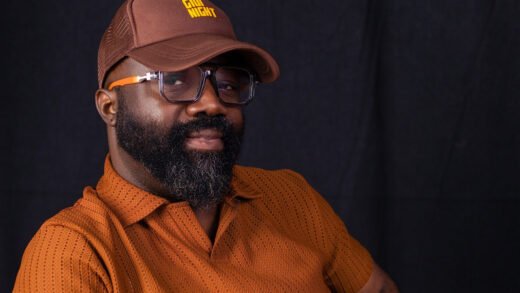

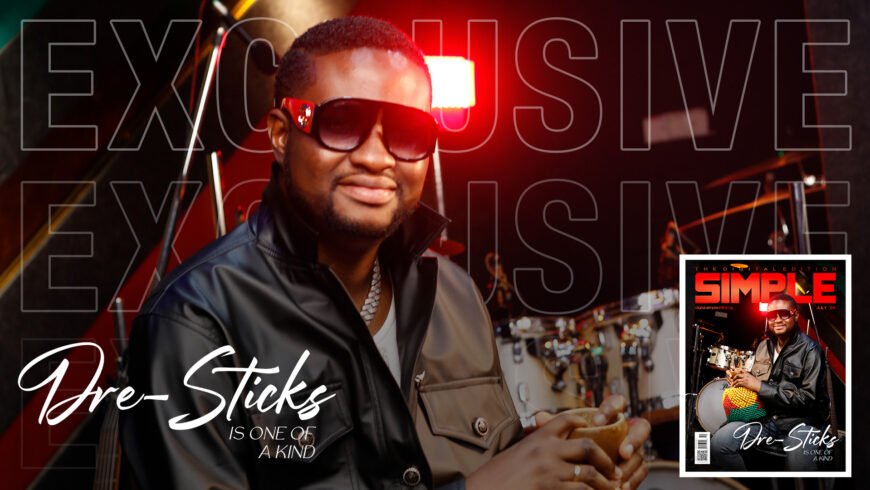
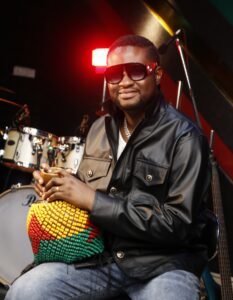
Decades after tearing his local church drum set in a spirit-filled frenzy earning himself the nickname “Faluya” which translate to tear of drum. Dre-sticks has taken his once jest filled Faluya brand like a badge of honour to great heights.
Born Oluwadamilare Odunlami, the Oyo state native and graduate of Urban and Regional Planning degree from the Federal University of Technology, Akure – is a music virtuoso as evidenced by his versatile expression across multiple music instruments and genres both as producer, songwriter and recording artiste. He is a perfect example of what fusion music is or can be.
Dre-sticks has worked on projects for and with the creme de la creme of Nigeria’s music industry and has earned the respect of the industry.
In an exclusive interview with Rayo of SIMPLE MAGAZINE, Dre-sticks delved into his fascinating musical journey, musical influences, the creation of his groundbreaking album, “One of a Kind,” and the significance of his Faluya of Africa brand.
Dre-sticks‘ latest album, “One of a Kind,” is a testament to his versatility and creativity. The album is a masterful fusion of genres, blending Folk, Afrobeats, Apala, Hip-Hop, Fuji, and R&B. Each track showcases his ability to seamlessly merge different sounds while maintaining a distinct Nigerian essence.
With his album “One of a Kind” receiving good nods from the industry, Dre-sticks is poised for even greater success. His dedication to creating clean, moralistic music that resonates with audiences of all ages and backgrounds is a testament to his integrity and vision.
Tell us about Dre-sticks?
My name is Odunlami Oluwadamilare, popularly known as Dre-sticks aka Faluya of Africa. I am from Oyo State; Kajola local government, Okeho is my hometown. I was born and raised in Ibadan, I attended Bodija International School, Oyela College and I am a graduate of Urban and Regional Planning from the Federal University of Technology, Akure. I am from a polygamous home, the last born of the family of about 16 children.
I am a local man, I love my language, culture, I love Nigeria so much it is just so painful that things aren’t working, and we just hope things will get better in the country.
What age did you decide to dedicate to music?
I began to pay attention to music when I was around 10/11, I realised I loved to listen to music, I realised I had good ears for good music, by 11 years old I realised it was easy for me to play the drums, I joined the brigade in my Baptist Church, Royal Ambassadors, by my teenage years I was already a professional drummer in Ibadan, living just to beat the drums, I was so passionate, but I did not know I was investing in myself. By the time I gained admission into higher institution I already knew music is what I wanted, it was a big risk because I didn’t know how it will turn out, I only went to school to be learned not because I wanted a career in that line. I always knew it would be music because I knew what I could do; I risked it all to get here.
What sounds influenced you coming up?
As music creative you don’t segregate when it comes to sounds, you should be an all-rounder. Growing up I listened to all kinds of music, my listening spectrum was wide, African music, local Nigerian Music, East African Music, Western Music (US & UK), Apala, Fuji, Awurebe, Waka, Rap, RnB, House Music, Country Music. Not segregating when it comes to music as a producer has really helped me to the point where I can also produce any kind of music. When you listen to the album you hear a bit of different sounds, but the root music is the Nigerian, indigenous sound.
What influenced the timing of the album?
Doing an album is a major milestone for me, because as a musician, I know where I am coming from, and it’s been a long time coming, it’s been part of the dream that someday, I am going to put out timeless body of works, cue the album, One of a Kind.
Any specific factor that necessitated the timing?
As a person I like to take my time when doing things, the album has been long overdue, but in a bid to make sure everything is perfectly done it has taken this much time to come to fruition. I could have released an album like 5 years ago, but I just wanted to fine-tune the sound and make sure I give people premium music.
Did you have a particular sound/theme in mind when you decided on the album?
Yes. I have always been an artiste who is different, my music is unique, and it’s different. It is a blend of a lot of indigenous sounds and some western sounds too. The music is different, and it’s very deliberate, I have always been on that path and that’s the whole idea of the sound I want to sell, project to the international market. It is my original sound, my comfort zone, it’s what I know how to do the most. When you listen to the album you will understand what I mean.
How did you come about the album title?
I searched for different ideas, something that will portray my music as different, something that will make my music stand out. When it comes to decision making I consult my wife a lot, we were in church when the idea came to my head, she approved it and that was it.
“As a music creative, you don’t segregate when it comes to sounds, you should be an all-rounder.”

Melody or the writing (lyrics)?
As a music professional, melody is king. I can say words like “I love you”, ordinarily it may not weigh much but when we bring in the melody it will trigger a whole lot of emotions. A good example is the 2000s era of Awilo Logomba, we Nigerians didn’t understand what he was saying yet we vibe with the music because the sound and melody was on point. As much as melody is king, as musicians we shouldn’t just dwell on the melody, there has to be substance to the music.
On the substance in your album?
For people who know me very well, when it comes to my music I am a moralist, anybody can listen to my music, it is clean, it is part of my standards, my decision and what I stand for, this isn’t about me being a saint or a gospel artiste, but anybody can listen to my music either old or young, regardless of your religion or beliefs.
A quick rundown of the songs; starting with Baba Rere?
Music can be very funny because of the ways the inspirations come, the biggest songs come unplanned.
Baba Rere was supposed to be content for something else, when I recorded it, the vibe was different and I was really enjoying it, I knew from that moment that the song was special. After using the song for the content I needed it for, a couple of my guys reached out to me and advised that I really make good use of the song. Eventually I fine-tuned, polished the song and released it.
On Nisho?
Nisho is a party track, it’s a feel good vibe, the song has my pattern of groove different from the mainstream groove prevalent, I do all these intentionally, my percussions, my rhythm, as someone that started music as a drummer I pay much attention to all these and make sure I achieve that uniqueness. As a drummer you know what to play to make people dance, I did all of that in the music to ensure that when you hear the music you must vibe with it one way or the other. I also made sure it is very melodious; when you listen to it you will hear a lot of melody. I just wanted a melodious and feel good song, it also came spontaneously too, when ‘Nisho’ came I was trying to create an RnB song when the song happened and I just accepted it gladly.
Is Nisho the lead single from the album?
Of course, all the songs on the album will be promoted; we are picking them one after the other, focusing on them one after the other, and Nisho is what we are on currently promoting. So far the numbers, the reviews and feedback have been impressive. I am really happy and I hope it does so much more.
Tell us about Ori?
I have always had that idea, wanting to have some kind of Fuji hook on Trap. I wanted something like Fuji, Apala, Awurebe on Hip-hop, and you’ll hear RnB, and I wanted a rapper on the song. It was basically like an experiment, one I am glad people really enjoy. The song also took a lot of time to make.
On the features selection in the album?
I am not an artiste who is desperate for collaborations or features, but if it comes, or it’s mutual. I don’t necessarily need collaborations for people to like my music, but if I get a collaboration that will take my music to the next level for audience, more visibility, why not, I will do it. I have been around for a long time and I will not go around being at people’s mercy for mere features or collaborations. I only featured 2 people on the album, Zeynab and Superwozzy, I have been a big fan of Zeynab for a while, I like her vibe, style and we have things in common, there is an indigenous sound in her music too, she’s also one of the biggest artiste in Benin Republic, the infusion of French and Yoruba into her music. When I first reached out to her some years back and she saw my work she liked my music, when I was ready for the feature and I informed her, she flew down to Nigeria, and we made good music. I called on a couple of known rappers to be on Ori but they didn’t turn up, in my head I was not looking for a name or popularity, I was more particular about the energy, and immediately I reached out to Superwozzy, he turned up as soon as he could and we fixed a date and made it work. I am still open to some more collaboration and remixes but it has to be mutual.
After completing the song and releasing it what did you feel?
I wouldn’t say I felt much different from the first time, as a person I love God, and anything I do I always want to reference God in my music. The song was just adoring God and it just feels good. When I am recording my songs, to a very good extent I know the songs that will thrive, I can tell immediately I start feeling it, but if I am still struggling to feel the song then it may not really be it.
Can you explain the feeling you get when you know the song will thrive?
I cannot say for other people’s music but for my music I can feel it, the reason is there is a lot of emotions that come with my music, regardless of the context of the music you will always find that emotion there. Emotionally when I am listening to the music and I feel it, I know. The emotion is what I always look out for, when I feel it, I know that if it can touch me like this it will touch others too.
What do you do to get into the mode of spontaneity?
You can tell, just like a footballer, you can tell when you’re in form, it happens to everybody in every craft. All of us in every craft that we do, we have times that we are not in form and times that we are in form. Sometimes as a musician you get into the studio and you can’t even create anything, maybe a distraction, creative block, and it happens a lot of times. I pay attention, when I am in form I always make good use of that moment, I will know, I won’t be struggling with the work, and once I begin to struggle I just leave it. As a creative there is a magic that comes with leaving what you are doing even for 2 minutes, by the time you come back to it magic happens than struggling with it and trying to get it right.
You mentioned starting as a drummer?
I started as a young drummer boy, I played in different churches growing up, being a drummer and playing with different musicians really added my wealth of knowledge in music. All of the things I have seen, heard and learnt over the years I just infuse and fine-tuned it into my music.
What is about drums that make good musicians?
I can’t say particularly what it is, but as a drummer we get to learn a lot about many other instruments and it helps in the grand scheme of things.
I feel I need to clarify something too, a lot of people mix things up, talking record producing, being a fantastic musician does not automatically mean you will be a fantastic record producer, the best instrumentalists are not the best record producers. Music production is more of creativity, is not about skills or dexterity on any instrument, it is from the head; it is all about what you can create in your head, if you can play instruments it is an added advantage.
“Music production is more of creativity, not just about skills, it is from the head.”
What is the most challenging track on the album?
When making records I take my time, all of those songs I took my time to record them. On this album, there was a night I was on fire; I felt like dropping the album that day, I recorded 3 songs from that album that night. The song that took my time the most was Laye, after that it was Nisho. I have an original version of Laye, I kept working on the song and flipping different things in it, before I released it my family members who were not in the studio with me already knew the melody from me working it over and over again.
At what point did you decide it was going to be production?
Dre-sticks is a musician, an artiste, a record producer, sound engineer, and content creator. I started music production proper when I was in University but I was not doing it commercially at the time. When I was not known, I was hustling with the production, sound engineering, it was what I used to sustain myself while putting myself together and making music. Making music is very expensive now, as an artiste you have to empower yourself, you have to double as a content creator to put yourself out there, get visibility and grow your fan base.
Who are the artistes you listened to growing up?
As I said when it comes to music I don’t segregate, I listen to everything. My mom would buy different records, Salawu Abeni, King Sunny Ade, Ebenezer Obey, so I was listening to all of this and listening to other songs on the radio. The first time I came across Boys II Men, End of the Road, that was when I fell in love with RnB through a friend’s Walkman. From then I started to explore more of their music, read their lyrics. I listened to Usher Raymond, Brian McKnight, Angelique Kidjo, Lagbaja, Fela, and many other artistes I can’t remember.
What do you want your fans to get from the album?
To my fans all over the world, I have recently released an album for you guys, there is a feeling I experienced while making this album and while listening to this album, I want you guys to listen to this album, experience this album, I promise it will be worth your while.
About FOA music?
The brand FOA means Faluya of Africa. I mentioned that I started as a drummer, during my early teen years, we were doing a revival in church and it was intense. I was playing the drums, I was so into the drumming that it just tore, and at the time not many churches had drum sets, me tearing the drum set was a big deal I had to run from the church and not go back till months after. While returning home I met my brother and his friend on his way to church and I explained that the drum tore and his first utterance was ‘O ti faluya’ and that’s how Faluya of Africa came about.
What is the service FOA music offers?
It is a music and entertainment company, we are into music production, both digital music production and live music production, we are into music publishing and as time goes on we will have other artistes under FOA music. We also do commercials and jingles for corporate brands.
Watch full interview on YouTube: