
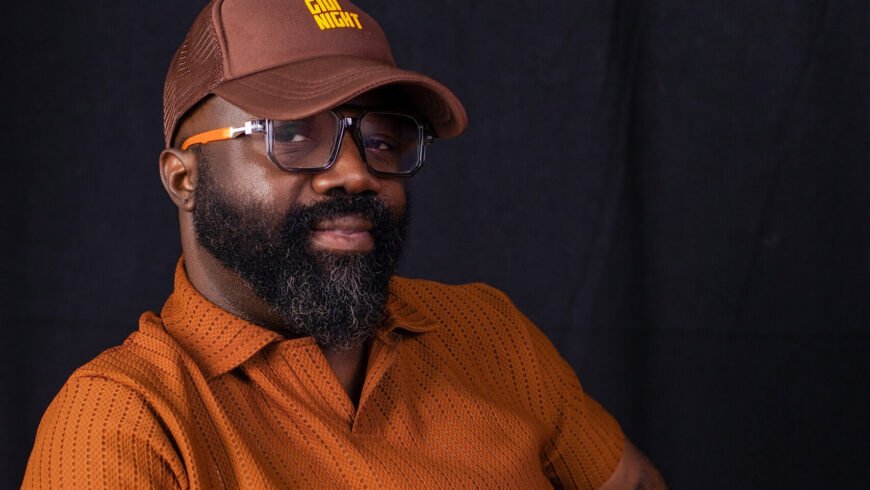
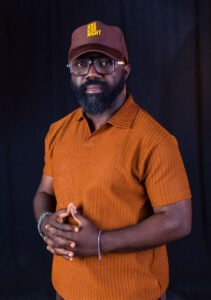
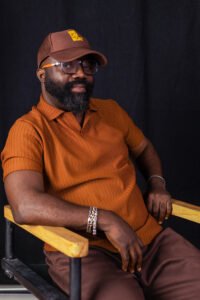
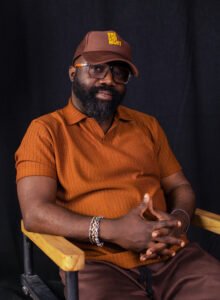
In a highly competitive industry where screen time is coveted, James Abinibi prioritises storytelling over competition. He’s passionate about crafting narratives that resonate and matter.
As a filmmaker, producer and director, Abinibi is renowned for his bold and purposeful storytelling. His films entertain audiences while simultaneously raising awareness about real social issues, striking a balance between commercial appeal and meaningful content. His work demonstrates that films can captivate large audiences and simultaneously address societal concerns.
One of his notable projects is “Miss PJ,” a film he wrote and directed. Starring Bimbo Ademoye and Sola Sobowale, “Miss PJ” achieved significant success on Prime Video. Within a week of its release, it topped the charts in Nigeria, Ghana and Cameroon, reflecting the film’s strong reception from audiences. This success exemplifies Abinibi’s ability to blend entertainment with compelling storytelling that keeps viewers engaged. “Miss PJ” delves into mystery and suspense, showcasing Abinibi’s talent for working with respected actors. His projects have featured a diverse cast including Bovi, Chidi Mokeme, Shaffy Bello, Kunle Idowu, Toyin Abraham, Woli Arole, Adekunle Gold, Frank Donga, Jude Chukwuka, Chris Okagbue and many others.
His work has garnered both audience acclaim and awards. In 2019, Abinibi was honoured with Best Director at the African Film Awards in the UK for his film Last Request. This recognition underscored his directorial talent and demonstrated the universal appeal of his filmmaking beyond Nigeria.
In this conversation, Abinibi delves into his latest project, One Gidi Night. This film explores profound themes such as love sacrifice desperation and survival. He also discusses the economic challenges facing cinema, the copy syndrome plaguing Nollywood his unfulfilled dream of making his favourite film and his excitement about bringing the Sango epic to the screen.
James Abinibi’s career is a testament to his commitment to creating meaningful work.
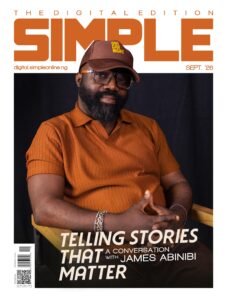
SIMPLE: Before becoming a filmmaker, what was your relationship with storytelling?
JAMES ABINIBI: Storytelling has always been a passion of mine from my secondary school days. I was an avid writer and a member of the school press club. I believe I completed my first novel by the end of my senior secondary school, although it was not published. I continue to write and love storytelling. When I entered university, I continued this passion. Interestingly, I believe I wrote my first feature-length story in my second year. Storytelling was what ultimately drew me to filmmaking.
SIMPLE: Some of your early films include A Great Day and Mentally. What is the first element you consider when developing a film? Is it the character, a social issue, location or an idea that cannot be ignored?
JAMES ABINIBI: Every story begins with an idea, but what is most important to me is the emotional connection. If there is no emotional angle to the storytelling, I do not want to tell it. I am not excited about it. My excitement for storytelling must be that I can connect with the audience emotionally—whether to make them laugh, make them angry, make them scared or evoke a range of emotions. It must simply connect with them emotionally. So stories, emotions, and then everything else follows.
SIMPLE: From some of the key ingredients you have mentioned for your story, what does a James Abinibi film need to have before you consider the story worth telling?
JAMES ABINIBI: The first element is the human angle. A relatable and believable human angle is crucial. That is what you should look for in a James Abinibi film. Secondly, performance is important. I am known to push actors, but I am not a slave driver. My job as a filmmaker is to help actors achieve their best performances and capture them. Therefore, you can expect a James Abinibi film to have very good performances from the actors, regardless of their background. Thirdly, my stories are now characterised by their non-linear nature. My stories do not end in closed chapters and I do not believe that is fair. I do not feel like I have done my job. I prefer to finish my feature films and leave the audience to imagine what comes next.
SIMPLE: As a prominent filmmaker, what are some Nigerian stories you believe filmmakers are still not telling enough?
JAMES ABINIBI: We are telling a wide variety of stories, ranging from epic to urban to modern life. I believe the only area where our storytelling could improve is the authentic execution. We have attempted to westernise our storytelling and I often observe that the way we speak, for example, is not the way most of our storytelling is explained. While storytelling has its own visual language, it also requires authentic execution that is believable and real. I do not want to see a character in a story and find it difficult to relate to someone in real life. When creating our protagonists and antagonists, we often give them a larger-than-life quality that detaches them from being human. I believe this aspect needs to be refined.
SIMPLE: When you are finally convinced that you have the story to work with, how much of that story is already in your mind before you begin pre-production?
JAMES ABINIBI: My process as a writer and director is that it starts with an idea. If I’m convinced that this idea is worth telling, here’s another mistake that we filmmakers make: we think that every story idea must be told. Some ideas are just ideas and probably won’t do well as a film, so there’s a structure to storytelling. Once I have an idea that I’m excited about and I know that okay, this is something that needs to be told—I don’t tell stories just because I want to make films; I make films because there are stories that need to be told. Do you understand? So once I get that, then I now go ahead and start drafting in my mind before I even write anything down. I usually have like notes on my phone—I just do like notes, itemisation, like okay, this first. Then I get to writing and once I write, I share with my close circle of friends to get their feedback. Usually while I’m sharing with them, I’m also fixing as I’m sharing with them and then once they get in their feedback—if they like it, or if there’s something that is not clear enough, or they’re not convinced—I’m already working on it also. Once I get that conviction that, you know what, this is a good one, I go ahead and start preparing for production.
SIMPLE: Story aside, idea aside, casting can completely change the way a story feels, and with somebody of your pedigree, you’ve definitely worked with actors of high calibre—actors like Shola Shobowale, Bimbo Ademoye, and a few reputable others. What do you look for in an actor when casting?
JAMES ABINIBI: That’s a very good question. I have to be sincere with you—there are different things I will look out for. Number one is the person’s past jobs. I want to see how committed they are to the craft, how much they give. I look out for actors that are willing to give, I look out for actors that are excited to perform. I look out for that a lot and then, of course, I make a list. Part of the list I also consider commercial viability, and this is where we have to be honest. I’m a producer also, yes, and I’m trying to make my money back. My partners’ money, my investors’ money, I’m trying to make that back, so I have to also use a bankable actor. That’s also part of what we look out for. Of course, I give newer talents opportunities to play, just like you can see in some of my previous jobs. There are newer faces that got major roles also, but I have to consider the viability of most of the key cast, so that I can be sure that at least they are fans because whether or not you want to admit it, a lot of fans watch movies because of their faves. So if you’re not catering to that demand, then what kind of producer are you? So I look at that. But most importantly for me, I also look out for the passion they have for the craft, and you can tell with their lifestyle. A lot of actors use this acting as a means to an end, meaning they’re not really passionate about being actors; it is the value that comes with being an actor that they are excited about, and there’s nothing wrong in that. I mean, it is what it is, but I also look out for those that really want to act, that this is all they know, that this is what they are excited about. So that is also very important for me.
SIMPLE: Alright, so let’s move to a few of your films, “Miss PJ” stands out. You moved into a thriller centred around a young NYSC member who finds herself confronting a dangerous situation while also touching on the experiences and resilience of a young woman. What attracted you to that story, and what did you want the audience to take away from such a story?
JAMES ABINIBI: I think usually I task myself with coming up with ideas, that’s how I am. I task myself like, okay, you know what, what would be a nice idea to work on right now? I play my mind trying to come up with stuff but what usually stands out for me is the human emotion, what can people connect with? And with “Miss PJ,” what I was trying to do was speak for the less privileged or the under-exposed, young females that are usually taken advantage of by people in positions of power and prestige. So that was what I was trying to do with Miss PJ. Like, it’s not only in the city that these things happen, it happens even way worse in local areas but those things don’t get to the news because, I mean, it happens there, it stays there. They are not usually on the internet. The news media does not really get coverage over there fully, so with Miss PJ, I was trying to say these things can actually be happening and we are not looking at it from that angle.
SIMPLE: I mean, that was a very interesting story, especially with the setting, picking such a location – because a lot of these things really happen and almost like it just goes unnoticed.
JAMES ABINIBI: Yes.
SIMPLE: Your latest project, One Gidi Night – take us through it?
JAMES ABINIBI: You know, the funny thing I’m going to say—this is an exclusive for you guys. One Gidi Night was, is something I came up with as a result of another project that I have done. I have another film called Rock City that has Kunle Remi, Chidimma, Kimmy, Shaffy Bello, Femi Branch, Lolade, and quite a lot of stars, and I felt like I’ve not done something for the cinema in a while, so I just told myself, and my guys, you know what, instead of just rushing to drop Rock City, let’s do something like an appetizer —like imagine I’m a chef and I’m going to make a good meal, but I’m telling you, I’m not ready to serve you the main meal today, but let me make some pepper noodles for you. Have a taste of that first while I’m bringing the main dish, and this is not to say that Rock City is a better film. It’s just on a bigger scale, the cast—and you can see the names that I’ve mentioned— and then it has multi-faceted characters. So it’s like a bigger project. One Gidi Night is a little less in terms of scale. Rock City inspired me to do One Good Night.
SIMPLE: Having moved from projects like A Great Day, Mentally, to Miss PJ, and now One Gidi Night. How would you say your approach has changed to filmmaking, or what has remained the same for you?
JAMES ABINIBI: Well, the one thing that is consistent is growth. I mean, from my very first film—the first one that I’m talking about, A Great Day—it was a short film, about 30 minutes. The second one I did after that was Honorable, and then of course, Mentally. You know, while making my short films, I was using that to test the waters after being in the background working on other people’s projects. I just said, okay, you know what, I’m ready to make mine and then of course I started but what I found out for each experience was that I got better at it. From the short film era to my first film, Mentally which I didn’t make the money back, but I learned a big lesson that I couldn’t have paid for and those experiences have been what has helped me to become a better filmmaker. With the recent jobs I’ve been doing, I know the kind of stories I want to tell. I’m more decisive about why I want to tell them and then the pressure of trying to play to the gallery is not on my side anymore. If I don’t feel excited personally about a story idea, I don’t go ahead to do it. I’m not trying to copy, I’m not trying to let people see that I can also do better than another person -I’m more passionate about what does this story mean to me. So those experiences of coming from where I’m coming from have really helped me to become a better filmmaker.
SIMPLE: It’s interesting that you mentioned making something for the cinema because, you’ve been quite outspoken about the economics of cinema releases in Nigeria, particularly the difficulty in recouping investments. What in your view is fundamentally broken about the current cinema business model?
JAMES ABINIBI: The number one thing is that we don’t have enough screens, and that’s the truth. We are all vying for the same screen time. If you meet the average person, every producer that has this project out there will tell you that their showtimes are not favourable for them to recoup their money, and that is everybody’s reality. Cinema people will tell you that if your film is not selling, I’m not going to give you more showtime because I’m going to lose money for the empty cinema seats that you’re not filling up. The cinema owners want to make money at all costs. You are hoping that they take a chance with you, but the problem is that I feel like if we have enough screens, it will be okay—and this is why I’ve been advocating for community cinemas. We are a communal people. Our people love to go together, see our few view centres, do you understand? Events and all that. We like to gather around and discuss and gist. So the cinema experience can be reduced to just community cinemas whereby you just come in and watch your film, and the barest minimum—if you want the popcorn, you buy it; if you don’t want, just watch the movie and go home. Make it more affordable. If we have about 500 screens now in Lagos, for instance—you can cross a billion in the weekend as a filmmaker, but the truth of the matter is there’s a limit to how much you can make as a filmmaker in Nigeria right now, considering that the screens are very limited, so that’s a major problem. Another thing is, I don’t think it’s a fair game in terms of what is being done with our distribution setup. It’s still a bit not effective yet. Our distribution is not really solid enough. You can go to the cinema, and that might be the end of the film. Distribution is a big deal for us as filmmakers as presently as it is, and of course, you’re aware Netflix and Prim have reduced their engagement with us here. So distribution is still a big deal. We still don’t know what the future holds. Everybody is just trying and hoping that things pick up.
SIMPLE: It’s interesting that you mentioned the Netflix thing because that brings us to streaming. You’ve had projects reach major streaming platforms, projects like Last Requests, Life and Death, which was very successful on Prime Video. Do you think streaming is ultimately a better opportunity for Nigerian filmmakers than cinema?
JAMES ABINIBI: Thank you. What I will tell you is streaming did for us was it gave us exposure to the wider audience. You can make your film here in Nigeria and somewhere in the US, in the UK people are enjoying it. That was what we did with Miss PJ, Life and Death. People saw it all over the world. They were calling “oh, I saw it, it’s really nice”. That’s what streaming does and then of course, before it got to the level that it is now, they were paying us in forex and you know, anything forex means conversions—bigger naira conversion. So yeah, it was a bit favourable but at the end of the day, being dependent on streaming from other parts of the world is not a permanent solution and just like you’ve seen now, as they withdraw their stuff we are now scrambling to see what can be done. I’m happy that we are beginning to look inward, we have Cava, we have Circuits, we have EbonyLife Plus, you know, quite a lot. I’m just hoping that those platforms are well equipped to be able to give that kind of service that the industry needs because trust me, we have great stories to be told.
SIMPLE: One thing that sort of stays in the mind is, why do you think, should I say western or foreign, streaming platforms pulled out? There are a few discussions about maybe it’s down to the level of production—maybe it’s not as good enough as it should be. Maybe the storytelling is just generic and it’s not standing out. I mean, what’s your view on this?
JAMES ABINIBI: Na me you want to take the trend. Lol! Well, I know there have been conversations, there have been rumours, and there have been accusations. I cannot categorically tell you this is what went wrong. I have an idea, but I cannot say those ideas because I don’t have solid evidence to back them up. We just know they are no longer here with us as they used to be.
SIMPLE: As a prominent filmmaker, what is the single biggest change the industry needs to make to compete better internationally?
JAMES ABINIBI: This is a very good question. I’ll tell you why. I was having this conversation with someone. This is something that a lot of our people don’t like to hear or discuss, but I’m saying this now in public. A lot of the people in filmmaking found their way there through hustle, not passion. And trust me, you know the average Nigerian will want to survive, and if there’s a way to survive anywhere, you know Nigerians will go there. So what I’m seeing as a major problem right now is that a lot of our people are not that trained. Some learn on the job and don’t have that much exposure and technical knowledge on how to give international standards. It’s a few of our people have developed themselves that they can compete anywhere in the world, and I know some of them. DPs, sound directors, ADs, quite a few of them, and we still have a lot of people that are not really well trained. They probably just understudy someone and find out that oh, I can make money doing this, and it does—you know, try to stay behind the person to pick one or two. So those usually tell in our production, and because some of our producers cannot tell what is good or bad apart—if you don’t have the eyes for it, if somebody gives you something that is not as good, you probably won’t be able to tell, you just take it and then, you know, there’s this thing about that, copy-syndrome. Syndrome that we have in Nigeria as a whole, not just Nollywood. If I use a DP now and that job goes out, goes on to be successful, people will come looking for that DP, not minding if the success on that job was not really dependent on this DP’s prowess. So the DP gets overbooked, there’s no time for him to improve on his skills, go out there, attend festivals, see more, interact. He gets overbooked because people have basically discovered or figured out in their mind that if I want to make a successful film, I have to use this person. So the same thing goes for the sound recordist; it goes for the art director— quite a lot— and I feel like that’s doing a big disservice to the really talented people in the industry because trust me, we have really talented people in the world, but nobody wants to give them a shot.
SIMPLE: Moving on, so we don’t make you a trend, lol. If you can remake one Nigerian classic movie—I mean, with today’s technology that we have existing, and your own creative style— which film would you choose and what will you do differently?
JAMES ABINIBI: Okay. So it’s funny that you ask that question because actually I’m in the process of one, but we stalled a little because now it will require a lot of capital investment that we have to be sure we can recoup back, and the story I’m talking about is the story of Sango. I mean, there have been adaptations of Sango in the past, but we did an intro, a test shoot, and it’s out there; we posted it, and it was really dope. Just so that it’s like a proof of concept of what is now possible with VFX and technology. This is outside AI; I’m talking standard production VFX, but of course, AI can now be implemented to do more.
So I think Sango—we’ve already written it. It’s a series, actually. Five episodes. It’s called Koso.
SIMPLE: I am sure that’s something people will love to see?
JAMES ABINIBI: Trust me, it’s mad, and what we’ve done with the story is to be able to get as much fact and logic in the story. This is stories that they are custodians of people that actually can tell from what they met in their family history and all that, so we want to be able to match that with the logic of humanity to tell a Sango story that is much more believable and enjoyable, and with the technology and all the resources that are available now, I think it would be nice to tell that story. So we are looking for investors, in case one—who calls up, we are ready.
SIMPLE: I mean, I’m sure they are out there. They are watching. You lost money making, “Mentally” found major streaming success with “Miss PJ,” and now you’re putting out “One Gidi Night” in cinemas. What has this journey taught you about where and how a Nigerian filmmaker should take a story to an audience?
JAMES ABINIBI: So the truth of the matter is, there are different platforms and these platforms have similar audiences. So you find somebody that watches YouTube at the cinema, you also find a person on Netflix or Amazon – I don’t think the platforms really matter as much as the storytelling itself. People want value, have you noticed that when Hollywood drops a major project their people do not come here to even do any meet and greet and activation and those? Spider-Man will be doing over 2 billion naira in about three weeks or less, Spider-Man did not come here to dance and what that tells you is that there’s a trust—there’s a level of trust that Hollywood has been able to create in the minds of the audience. It’s not like our people don’t like movies, they like movies but they don’t trust us enough that we will deliver as much as they expect. So they rather bet on what they’ve tested and verified over time, I think what we need to do more instead is focus on being better storytellers, making films that our people can be proud of, confident enough to say, you know what, I want to see this film. That’s what I think we should be thinking.
SIMPLE: It’s interesting that you mentioned Spider-Man because I’m just thinking of it—for their stories to be all in our faces here. I mean, at the end of the day, it all comes down to advertising and marketing. Do you feel like currently in Nigeria we do enough of that?
JAMES ABINIBI: I mean, that’s a shout-out to Funke Akindele; she has hacked it, and this is something that she gets better at every year when she’s trying to do her cinema run. To an extent, we have, but I think what works in Nollywood is more of a following—a micro-community of fans that believe in what you do. If Funke Akindele is dropping her own movie, she has fans that are passionately going to promote that film for her, but it’s not the same thing if I use Funke Akindele in my film and I expect that her fans will come out as much. You can understand the logic now, so there’s a marketing approach that she has been able to use over time that is working for her, and I think we should look at more effective ways. I’ve been known to talk publicly, just like you said, about the industry, highlight our issues, and at some point, I mentioned that marketing and dancing do not really sell movies; people felt offended, and I was like, it’s not an attack, it’s a reality. It’s the truth. Funke’s approach to dancing is because she loves to dance; if you know her as a person, you can tell that personally, she’s a vibe queen, and dancing is something she’s used to. It worked for her, doesn’t mean it will work for everybody. Secondly, I don’t know how to dance, my brother. So we need to be creative. We need to be creative to find other ways of marketing; nobody should knock down anybody’s process. If dancing works, go ahead and use it, but don’t say that people should not dance, or don’t knock somebody for dancing. My own is that we should just stop with the copy syndrome; don’t do stuff because someone else is doing it. Do stuff because you have your own reasons, be more intentional about what you are doing because, if you try out what somebody is doing and you are not so convinced on how to execute yours, you might lose out, and that is actually what is happening.
SIMPLE: As far as the movie is moving, looking ahead, what is the bigger ambition for James Abinibi and Rock Bottom Films?
JAMES ABINIBI: Thank you. So the bigger ambition for me personally and our production company is to tell more stories that people can relate to. I wouldn’t call myself a commercial director, and that is to say I don’t want to do more than two—maximum three—projects in a year. If I do two, I’m very, very okay. At most, maybe three because filmmaking is very sensitive to me and I’m not the kind of director that just comes to direct and goes. I follow through from pre-production to post, I supervise, I’m involved, engaged in all the process because it’s also part of the job. I can’t just take a project and do it for somebody and ghost. So for us, I’m hoping in the coming months we’ll be able to do a bit more than what we are currently doing in terms of execution and these things are not easy to do because, of course, I’m an independent filmmaker. So I don’t have strong backing of, you know, people giving me money as much—just a few of my friends that believe in what we do and what I do. We come together and combine our resources to bring this, and that’s what I’ve been doing. So hopefully, expect more interesting stories, also we’re probably going to consider doing stuff for YouTube, but not on the YouTube scale. We’re probably going to bring authentic filmmaking that’s a bit more elevated—let me use that word—to YouTube. I mean, you know that there’s a style to YouTube films and once you hear YouTube, there’s something—there’s an expectation of what you are looking for but we are trying not to come with that.
SIMPLE: I want you to walk us through what a typical day looks like for you and this is away from producing, thinking about scripts, budgets, and the like. Just what your usual day looks like from top to bottom?
JAMES ABINIBI: You cannot take away those things you mentioned. I’m a workaholic; there’s literally no day that I don’t work. I try not to work as much, and it’s not even a matter of pending projects, but there’s always something to do. I’m an ideas man; I have businesses aside from my filmmaking, but I’m always working. There’s always something to do. I can’t think of a day that I will just sit down and say, “Okay, there’s nothing to do for this week, there’s nothing to—I can’t think of it.” There’s a project—as I’m talking to you, I have apps. Three apps that I’m supposed to have launched, but I don’t even have time to plan the launching. My typical day—wake up, thank God, start my day with work.
SIMPLE: So, but if you choose to relax, what would relaxation look like?
JAMES ABINIBI: Oh, just get me to the beach, a private beach that’s not crowded. Just put me in front of the water. I’m good to go —I like nature a lot. I like to travel; when I travel, I try to go to where I can experience nature as much as possible—that’s my best way to relax, and then I love watching movies. I know it sounds self-serving because I’m a filmmaker, but that’s what I enjoy the most. I listen to music a lot, but that’s when I’m walking or driving; I get my best script done when I’m listening to music. There’s a playlist that I used to—you know, those things. Those songs have something that they do to my brain when I’m writing.
SIMPLE: It’s interesting to hear that. I’m going to touch on one last question, and that’s because you mentioned you enjoy watching movies. Yes. I’m very sure that as a filmmaker, what you see when you watch movies is different from what the average person would see. So, when you watch movies, especially maybe westernised movies, what are some of the things or should I say—ideas, concepts that you feel like we are not making use of enough here?
JAMES ABINIBI: Okay, so number one, I’m the bad person to watch a movie with. I analyse everything, I’m rewinding and I’m pausing when I’m watching it. I can watch one movie for five hours, six hours or more. I’m watching a movie because I’m picking everything and I hardly watch movies twice.
These days I just try to watch as many series that are not really that intense, just to relax. Comedy and all that, I just use that to relax. If I watch a scene and I love the performance or something that was executed, I will rewind it, see it again. I also love going to the cinema when it’s not crowded. I’ve found a hack and I know which cinemas to go to where it’s just going to be myself or a few people in the cinema because our cinema culture in Nigeria is terrible, people are answering phone calls, walking and gisting.
SIMPLE: So I’m going to ask you two questions. I want you to give me your favourite movie—and that is from your own work, either released or unreleased—and your favourite that is not from you?
JAMES ABINIBI: My favourite movie for me, I’ve not done it yet. Let me tell you why, I write a lot. I’m into ideas and there are some stories that I’ve written that I know that if I make those films, they will really do well, especially globally but here’s the thing—I don’t have people looking for me to say, what stories do you have? Let’s work. So I still have to keep those stories to myself and if I don’t have resources, so everything that I’m doing presently is stuff that is easy for me to do because of resources that I can raise but trust me, the stories that I have written—that I know that if I do those things, I’ll be fulfilled as a filmmaker but I’ve not had the resources to do them. So these ones I’m doing can’t be my favourite when I know that I have crazier stories and you know, another thing about my stories is that they are quite uncommon. I mean, if you check Miss PJ.
SIMPLE: Very uncommon?
JAMES ABINIBI: Do you understand, so imagine what I have in store. If you watch Miss PJ, One Gidi Night and then the next one, Rock City—you will find out they have their different world and that’s something unique to my storytelling. I have a lot more I’ve written that I can’t wait. Then of course for foreign movies, it’s hard to pick because I’m a film boy -I love films a lot. I can’t really say this is my favourite movie of all time but I can tell you some of my favourite actors, though.
SIMPLE: Let’s have that?
JAMES ABINIBI: Number one on the list: Al Pacino, all-time great. Anything with Al Pacino I want to see it. Samuel L. Jackson, even though sometimes he can be stereotyped but I love his performance but then my second all-time favourite would be Denzel Washington. Anything with Denzel, just bring him no discussions.
SIMPLE: Give us one more person?
JAMES ABINIBI: Jim Carrey because I love comedy a lot, and nobody comes close when it comes to comedy. For me, in my books nobody comes close. Jim Carrey is up there.
Watch Full Video Here:
Production Credit:
Interviewed by Tola Adebayo
Photographed by Oluwadamilare Olagunju
Videographed by Fisayo Ebiniyi
Creative Director: Rayo Kasali
Executive Producer: Adedamola Edun