
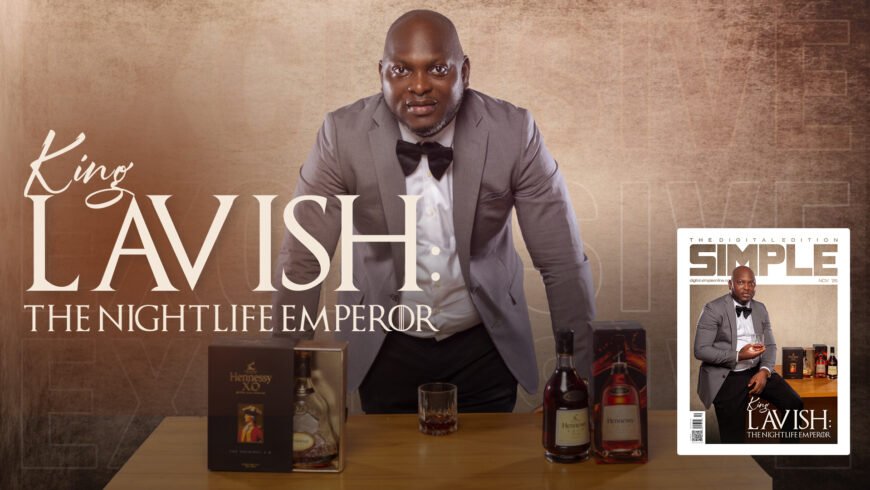
Adedeji Hundeyin, the CEO of Lavish Brand and Promotions and General and Strategy Manager at Kristal Lagos.
He is a highly experienced IT project manager with 15 years’ experience and a strong drive for implementation. His proven experience spans multiple industries and disciplines, including banking, IT, oil and gas, health, and the nightlife industry.
Adedeji Hundeyin better known as King Lavish or Nightlife Emperor has built a reputation in the nightlife and entertainment industry.
In this interview, he discussed the Nigerian entertainment and nightlife scene, the misconception about nightlife and its impact on culture and the economy.
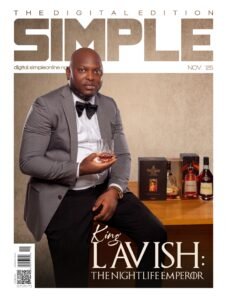
Mr Hundeyin, you have built a reputation that transcends nightlife promotion; you are seen as a symbol of Lagos nightlife. When you hear names like “Nightlife Emperor” or “Lavish,” how do you personally interpret that?
I am not the face of nightlife in Nigeria; I am simply a part of its story on mainland and Ikeja. I have been involved since 2010, more than 15 years. When I hear words like Lavish or the Nightlife Emperor, I think of the concept of an emperor who must conquer kingdoms to protect them and the need for kings to rule them. Within the nightlife space, I realise many people I mentor or have influenced are now kings in their respective fields. They are influential figures such as prominent promoters, renowned DJs, and media personalities that are the kings of their own kingdoms. When I look at them, I call them kings and am proud to attribute a part of their success to my own experience. Therefore, I always feel a sense of pride when I hear people call me an emperor.
What moment or milestone made you realise you were no longer just an individual in the scene but a brand and a movement?
Two experiences came to mind when I think of that particular moment. The first occurred in 2017 when I signed my first brand contract. This realisation came to me that I am more than an individual; I am a brand recognised by another. It then dawned on me that I represent a brand.
When Pernod Ricard sought to reintroduce Martell in Nigeria, my outlet was the first to host their first activation. When they flew Wale from the US and I was one of the key figures in that project, you can see how Martell is now perceived within the cognac market in Nigeria. When I reflect on that movement, that moment was pivotal. I was officially recognised and signed to a brand as an influential figure. Secondly, the moment when some of the protégés I mentored began signing international deals, embarking on international tours and referencing me in their stories, confirmed that I am no longer just an individual; I am now a face of a movement.
Nigeria’s entertainment and nightlife scene is fiercely competitive. What unique philosophy or approach has helped you build such a distinct presence?
Similar to every cell of life, the Nigerian nightlife space is highly competitive. This competitiveness arose when people realised the value of investing and promoting effectively to achieve a significant return in a short period. Consequently, it attracted many businessmen and investors seeking maximum returns.
For me, the key to success is establishing a distinct and unique business identity- people must recognise you. When they hear Lavish, they know it is different. You must build a very different identity and be true to yourself; there is no shortcut in this business; it is all service. Once people know you are true to yourself, you have a distinct identity within your space and they know you value customer service. This is enough to differentiate you from the mass crowd that seeks to cut corners.
For example, within the nightlife space, some people know that in their desire to make profit, they take shortcuts, they sell adulterated drinks, thinking that people would not find out. Eventually, this always boomerangs on them because when people discover they cannot trust what you serve or what you offer, they stop patronising you. In my opinion, being true to service and building that distinct identity has been the key to my success.
Regarding the issue of drink adulteration, which has the potential to damage the nightlife industry in Nigeria, what are your thoughts?
For adulteration to occur, the original product must exist. Once a brand achieves success, competitors often replicate it. They assume that the nightlife market is less discerning and that consumers will not notice the difference. However, this is a common misconception- adulterated products can severely damage a brand’s reputation and business. Consequently, I prioritise direct relationships with the major distributors of the products I promote. For instance, I served as the brand’s influential ambassador for Pernod Ricard for five to six years and directly dealt with their products. When this was not possible, I liaised with their major distributors to ensure I was connected to their own. This approach helps me identify and avoid adulterated products.
Many in the nightlife industry are aware that patronising outside establishments can lead to the consumption of adulterated products. This practice can have a detrimental impact on reputation and is a significant concern for those involved in the industry.
What is the most common misconception people have about the nightlife industry and the work you do?
This is a misconception I must clarify frequently. The perception of nightlife is that it is solely about enjoyment with no serious work involved. It is often viewed as a lifestyle centred on parties and irresponsibility, with a belief that there is nothing substantial to it. This is a significant misconception. When people come to me, they are often surprised by the amount of hard work, planning, research and dedication that goes into what they see on a weekly basis. They realise that nightlife involves working round the clock, particularly at night, and that during the day there is a focus on stocking, inventory and accounting. This misconception is for those on the outside but once you are close to the industry you realise the seriousness and responsibility we carry as those who run nightlife.
“You must keep current if you want to be around for long”

Beyond the parties, how do you see nightlife shaping culture, business and even the economy in cities like Lagos?
Nightlife has various segments that follow it. For people to want to go out, they will first consider their attire, so fashion is a direct subsection linked to nightlife. Nightlife influences fashion and fashion enables nightlife in return. Secondly, people travel to nightlife via various forms of transportation, whether it is their personal car or a taxi. This is directly related to nightlife as people will drink, whether it is alcoholic or non-alcoholic, which is also a result of nightlife.
Nightlife has created opportunities in all these areas, and that is how it has shaped some of the norms around it. Music today has shaped culture, trends; the carnival we celebrate on a regular basis; they are all powered by music. Fashion is shaped by trends and culture; our cultures determine our sense of fashion, and all of these lead to nightlife. The press, the journalists who tell the story of nightlife, the trailblazers, key players within fashion, music, and nightlife itself— it is also a result of the opportunity.
Lagos nightlife is legendary; how do you think it compares to other entertainment capitals across Africa, Accra, Johannesburg, and Nairobi?
You know they will always be Nigerian players doing great things all across the world; we are not just running a local industry; we are exporting it all across the world in carnivals, standout events, and all. Nigerian players in music, fashion, brand, the nightlife industry is global, and from time to time, they are stages with foreign talent coming to Nigeria, and we are also exporting our culture all over the world. You can’t go anywhere in the world that you will not find an African kitchen or lounge prepared by one of our local players today, and it will continue to be so.
Nightlife has its stereotypes: big bottles, loud music, flashy cars. What’s one “nightlife stereotype” you think is overrated?
It is the same stereotypes that people have about it; they always don’t have the seriousness about it from outside, and they only see the party and grooving side of it; they don’t realise the amount of hard work and dedication that goes into it. When I talk about the budget to run a nightlife outfit, it will blow your mind— if you see the amount of resources, capital that is even needed to operate within that space, it’s not a child’s play; it’s just the conception that people have, and you know it’s fun and notable.
Lagos nightlife can be very political. Have you ever had to navigate power plays or turf wars and how to handle it?
When you say we are all political animals and when you’re in nightlife and you play an ambassador role, you have to be very natural because you deal with everybody from all walks of life. You will deal with an APC man, you will deal with a PDP, LP man and your role at every point of time is to try and stay natural. Your goal is to serve everybody but then not running away from what is being around you, especially in a political charge environment. My role for the current brand ‘Moet & Chandon’, I want everybody to take with my brand respectively of your political appreciation so I try to stay neutral. I don’t identify basically with any politics in my roles and because I want everybody to stick to my product, I want everybody to drink Moet Hennessy respectively of your political ambition. Moet & Hennessy is good for the body.
A lot of people whisper about promoters and their relationship with celebrities, politicians, even “big spenders”. How do you navigate that world losing your personal values?
You must understand that everybody you meet has something to add to you and something to take away from you if you let it. So putting that behind your mind will make you know how you relate with everybody. You will want to leave a lasting impression with whoever you deal with and when you have that mindset of service, there shouldn’t be any issue. You can navigate any affiliations, any relationship or collaboration with the mindset of service and knowing that all you have to do is add value.

If you had to design the future of nightlife in Nigeria, what would you add, remove, or completely transform?
The truth is that you cant design a future in an aesthetic fashion because if you look at the present time we are now, for examples in 2010 the players that we have now in the nightlife, 90 percent are no longer operational today- they are not part of the present. The present is dictate by a new set of players so when you say you want to calm down and design a future, a future you might not be part of. So the future will evolve by itself base on the kind of player operating at that that time and the amount of investment that is been poured into industry because the Gen-z dominated the future so a lot of what we do today would be Childs play to compare what will be in that future. For me I worry less about that future it will evolve naturally and organically by itself.
Do you see Nigerian nightlife becoming an exportable culture the way Afrobeats has gone global?
As at today we are rated number 2nd second in Africa and 14th in the world as the biggest nightlife space. We have built a niche for ourselves and soon I see Nigeria as the number 1 in Africa.
You represent and collaborate with some of the biggest clubs and lifestyle brands in Nigeria. What’s your philosophy when it comes to choosing the brands you align with?
When I was starting in nightlife I was fortunate to start with an ambitious and very big brand which is “The Place Group,” they had just started they first flag sheep at Isaac John Gra Ikeja, I came on board and I learnt a whole lot from them because they operated with philosophy that align with mine, they were quite ambitious because within a couple of years they’ve expand very rapidly, they’ve open up in other locations like Lekki so it kind of shape me in beginning.
For me to collaborate with other brands I must see there level of ambition and sense of sincerity- this is a place of where I will have the opportunity to grow as an individual and a brand so that shape my philosophy from the right set and I have never compromises in any collaboration. I don’t just partner with any brand that comes my way I filter them and I deal with the serious ones.
There’s a debate about whether nightlife empowers the youth with opportunities or distracts them from building real futures. As someone who sit at the center of it, what’s your takes?
The truth is that we cannot all be doctors or engineers we cant all be pilot, nightlife is career and it is fully made by the youth. It has created industry within industries like example I will make use of Adedamola Edun in 2010, do you know how young that dreams at a time to tell the story in the very unique manners, bring out players to prominent, trailblazers to document their story to the future and out that side by side to people doing fashion, music think about how young Reekado Banks is in 2010, think about people into fashion who were creating unique attires that people wear outdoors, indoors how people looks to win award at awards night event, so it not always a distractions- people that want to be distracted would be distracted irrespective of nightlife, if you are not focus about your life you cannot get anything done either nightlife or not. The opportunity nightlife as created is undeniable, it glaring, it huge and more investment fall into nightlife and it will continue to expand.
If you weren’t in nightlife what career would you probably be doing right now?
My first degree is Economics from Lagos State University and I had my master in Business Administration from Edinburgh Business School in Scotland and before I came into nightlife full time, I worked with a bank from 2005 to 2009, I also worked with an oil and gas company as an assistance ICT manger. I came into nightlife full time after I finish my NBA in 2015, since then I’ve been working in nightlife but if I’m not into nightlife I would probably in be a general manager of an IT company today.
“Consistency in whatever you are offering is the number one key, you don’t flip flop.”

A lot of young promoters and entertainers look up to you. What would you say are the three things they must understand if they want to build longevity in nightlife?
You cannot be around has long as I have being if you are not consistence. Consistency in whatever you are offering is the number one key, you don’t flip flop, you don’t put one attribute today and tomorrow you will say I’m no longer that person, people must rely 100 percent on whatever proposition you bring to the table. Consistency is number.
Secondly, you must be very relevant because you cannot run today’s world with yesterday’s idea. You must keep current and keep update if you are going to be around long and lastly is you need to be truth to yourself. Over the cause of my journey, I have crossed around a lot of people and one unique thing about everybody tells me is there was something you did to me when I was struggling, you said something to me you gave me a reference you directed me in a way that as lead me to who I am today. If you are going to be around for long, you must be approachable, you must be open and be willing to help people because we never can know what tomorrow will bring. I think those are the three things that will make you relevant.
What advice do you have to the young entrepreneurs?
I will say that your foundations matters and you must follow your passion. I will tell you a story, even with everything that I have acquired academically I remember I started organising event at my university days I was in 200 level, I started with departmental awards night called Echo Awards which later became award for the entire university. I love organizing event, naturally putting shows together, club parties and stuffs so when I left university and went for my youth services and came back I’m always looking out for opportunity within the nightlife space and I found one and I took it since then have never gone back.
For a young entrepreneur, I think you are most likely to succeed around your passion, something that comes naturally to you and you must identify it very early, and pursue it with everything you have.
Lastly when you’re not being the nightlife emperor, what does Adedeji Hundeyin look like away from the lights, the champagne, and the crowd?
In fact only few people know me as Deji or Adedeji everybody knows Lavish because that is the side they are expose to on a constant basis. Away from all of that, I’m just a simple person- people don’t believe when I say am a bit of an introvert in away, if I don’t have a need to be out I would rather be in reading books or watching movies or been at the gym or go to church. So I keep it simple when I need to, I enjoy my privacy when I need to, aside from that nothing more that what Adedeji is- a very simple guy who loves is space.
Watch full interview on YouTube:
Production Credit:
Interviewed by Tola Adebayo
Photographed by Dare Yomi
Videographed by Fisayo Ebiniyi
Creative Director: Rayo Kasali
Executive Producer: Adedamola Edun