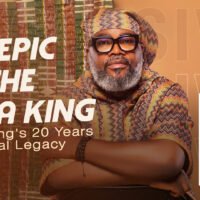

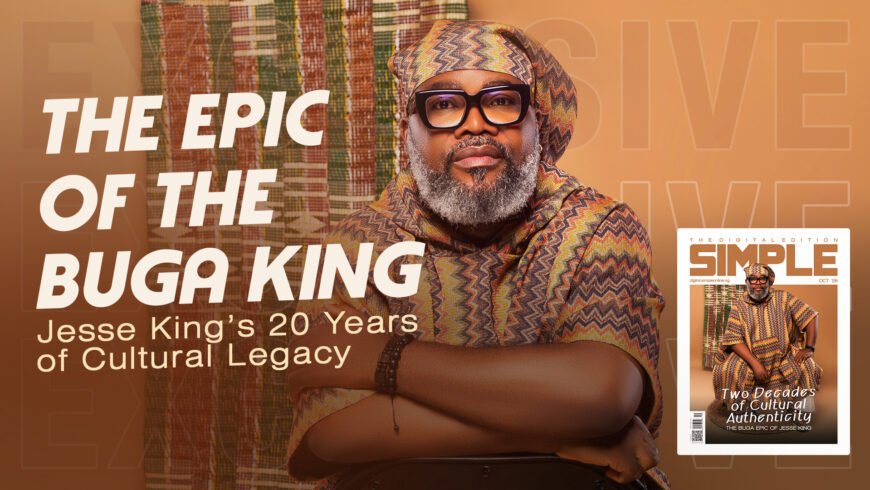
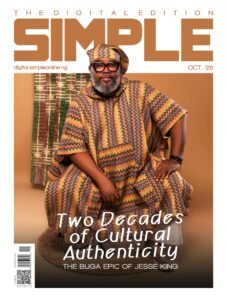
It’s not every day you encounter an artist who has spent two decades carving a distinctive path in the Nigerian music industry without compromising his cultural identity. Jesse King, the “Bolanle and Buga” crooner born Jesse Omokagbor, is a Nigerian highlife musician and cultural ambassador who has spent over two decades creating music that bridges generations.
Born in Ibadan, Oyo State, and raised in a mission house where his father served as a clergyman in the Christ Apostolic Church, his musical foundation was built on hymns and symphonies before evolving into the distinctive sound that has made him a household name.
His sound resonates across generations, from the elders who appreciate its roots to the younger listeners who embrace its timeless appeal. His breakthrough hit “Buga” became a cultural phenomenon, cementing his place in Nigerian music history.
Known for his use of Yoruba proverbs and idioms despite Yoruba not being his native tongue, Jesse King Buga has become a symbol of cultural unity, creating songs that celebrate communities across Nigeria, from Ibadan to Ijebu to Lagos to Ekiti.
Jesse King Buga continues to prove that authenticity, passion, and cultural pride are timeless ingredients for musical success.
In this exclusive interview with SimpleTV, the man behind the hit track “Buga” opens up about his remarkable journey, from singing hymns in a mission house in Ibadan to becoming one of Nigeria’s most respected cultural ambassadors. With his 20th anniversary and a new album on the horizon, Jesse King Buga shares his philosophy on authenticity, cultural preservation, and the unifying power of music.
SIMPLE: How does it feel to have sustained such a distinctive sound and identity for two decades?
JESSE KING: Well, thank God for God and thank God for the inspiration. Creativity has to come with authenticity, and when you are authentic, believe me, it’s going to go beyond generations.
SIMPLE: When you look back to your first major performance or recording, what memories stand out the most?
JESSE KING: I think there are a lot of memories, there are a lot of performances which I’ve made when I was about to get into the industry. That was almost over 20 years right now, I guess, and we were at La Capine Tropicana which the Oluwale actually invited me to perform, and “Bolanle” was the track then it was not even “Buga“. It was like a play I started with, and I was not even with my costume. I said okay, let me try this and honestly, the whole place was just upside down.
SIMPLE: Many people assume you are Ijebu, but you’re actually from Edo State. How do you bring your cultural connection and your brand expression?
JESSE KING: First of all, I’m a man with visions, like bringing communities together. I was born right there in Ibadan, Eleyele to be precise, and I think I’m just in love with the culture and the people. What we have is the originality, which I’ve talked about earlier on. I think it’s all about the culture. So coming from a particular axis or a place doesn’t really matter to me, what matters is just you representing who you are and the originality inside of you.
SIMPLE: Tell us a bit about your childhood. What was growing up like for you and what early experiences influenced your love for music?
JESSE KING: My growing up is so very beautiful, back in the days when I grew up in the mission house where my dad is a clergyman, Christ Apostolic Church. I started right inside where the music started from, where we talked about the rudiments of music, and talked of the hymns right in church. I joined the little ones, the choir which we call them, then from then to the senior choir, and I strongly believe that that has actually been the projection which started my music career. I started with the real music when you talk about the symphonies, talk about the hymns, and it was a very beautiful time. That is actually helping me out today in my career.
SIMPLE: Do you remember your first time performing or realising that music was your calling?
JESSE KING: I can’t really pinpoint it, but it all started from church. I guess years ago when I was with Mrs. Kazeem on NTA, that was my first time on TV, I guess, that’s Youth Scene. I don’t know if anybody knows about the Youth Scene, which we had then. Myself, Blessing, then a guy called Ayo, we were able to perform a song which I composed myself, and it was a very beautiful time out.
SIMPLE: What kind of family background do you come from? Were your parents or relatives musically inclined?
JESSE KING: Yes, my background, of course, is a musically inclined kind of family, every one of us in the family. In fact, my younger brother, who is Beat by Jaba, produced all my songs, aside from the first album which had a lot of producers right there, Biodun Olukonu, then Joshua Olaniyan and some other guys, but every other album it has actually been produced by my younger brother because I think we both understand what we really want to give to the people, and we’ve been having a wonderful time together, with songs like Ijebu, like Ikorodu, like all that beautiful. Even “Mr. Wale” was produced by him, Beat by Jaba.
SIMPLE: What drew you to the Yoruba language as a primary medium of music, even though it’s not your native language?
JESSE KING: When you look at the history; the Edo and Yoruba’s, we actually are like cousins when you go through the history and of course, you know, I love culture, even my own native tongue— I love it so much and I actually put a song together lately. Anything that has to do with culture, I love other people’s culture, I respect other people’s culture, and of course I want you to respect my own culture. The major projection, the view, the way I see life is getting to know who you are, which is your culture is the number one thing, because that is the day-to-day thing that you do that makes you different from other people. I love every culture of course, my own culture number one.
SIMPLE: What does your deep understanding of Yoruba idioms come from?
JESSE KING: Like I said, it has been like this cultural business thing. When you live in an environment, you grow up in an environment where we all play around with stuff, like the language we speak, the people, everyday people -all these things are actually a great influence on whatever I’m doing. The place, the environment, and the people are part of my inspiration that makes it happen for me.
SIMPLE: Do you write your songs based on specific proverbs, or do the proverbs come naturally during composition?
JESSE KING: I write my songs with personal experience and of course application of proverbs, because it’s an everyday thing. This is what is happening to everyone, and I do write my song with fiction and at the same time you know, input my proverbs in there because these are the language and these are our strengths.
SIMPLE: What was the Nigerian music scene like when you started out and what challenges did you face breaking through with a traditional sound?
JESSE KING: There were a lot of challenges out there, but the first thing is just for you to have someone to believe in what you’re doing. I was so lucky to find one or two people, and that is where I got to know Ahmed Ogunbanwo, he had a record label which he actually pushed me out there. Every other thing is just like a learning process. The major challenge is for you to have someone to say “I believe in what this guy is doing,” and I know that I’m actually doing something different. I was actually looking for someone to say “okay let’s go ahead, let’s just do this, put in money and all that.” I was so lucky to have my brother, Ahmed Ogunbanwo, who made it happen, and since then it’s a story now, it’s like a history now.
SIMPLE: How did you navigate the industry at the time when your style was not the mainstream sound?
JESSE KING: When you believe in yourself, and you know that, you keep pushing. While you keep pushing, you need to make yourself available and you have to really identify yourself with a particular kind of people, because when you have people in the industry, you need to get yourself involved in so many things. Even if they do not even call you for money, go there, do your thing and let people feel you. I think that was just the goal for me to make sure that I get people convinced about what I’m doing, what I was doing, but today is a different story and thank God.
“Coming together to make things done, with togetherness we can make it happen.”
SIMPLE: Was there ever any moment you felt like pressure for you to switch from the traditional to English driving style?
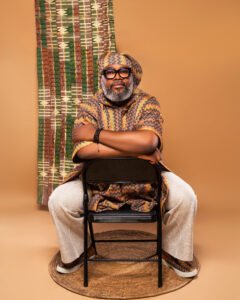
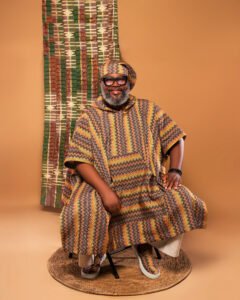
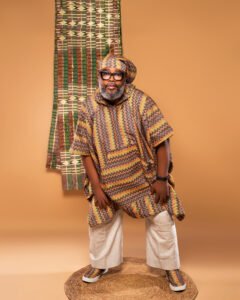
JESSE KING: I think the truth about this is just like you need to know who you are. You know, I’ve never in my life even given it a kind of thought that maybe I have to leave what I’m doing. When you look at me, you see my costume is so different; that’s the way I want to be. All I’m just looking for is just like if you love me, if you care for me, then you go with me in this movement, you know, not me shifting. I know that I cannot in any way defend what I don’t know. It is what I know that I can defend. So I’m doing what I can defend.
SIMPLE: When you recorded “Buga,” did you expect it would have such a massive cultural impact?
JESSE KING: What I was just thinking was what makes me feel good, you know. When I listen to my sound, I feel this is good and I think I’m trying to search for any other thing out there that sounds like this. “Okay, does it sound like this?” I think I love the way it sounded. First of all, I was feeling myself, trying to feel good. I listen to my song and I feel good, so every other thing was just coming before the other.
SIMPLE: What inspired that song ‘Buga’, and how did your life change after its success?
JESSE KING: I had a personal experience with my life, and then I feel like for you to be a man, you should be able to defend yourself as a man, and for somebody to Buga, you need to understand, you need to stand for what you believe in. You cannot in any way defend what you don’t believe in or you can stand in for what you don’t know. So for you to Buga somebody, then you need to stand. I see myself coming out to say no, I’ve come to stay and I’m gonna stay. I’m going to Buga you if care is not taken, I’m going to take it off you.
“You cannot in any way defend what you don’t believe in or you can stand in for what you don’t know.”
SIMPLE: Your music bridges generations, how do you maintain a sound that resonates with both elders and younger listeners?
JESSE KING: Yeah, that’s the vision, I’m the bridge connecting the old ones and the new ones together because I would just say it’s just a gift for me to work on my songs, to bring it and shake up my lyrics to make sure that the younger ones now can as well just be part of it, and that has been happening. I thank God for that.
SIMPLE: Yoruba music has taken many forms from Fuji to Afrobeat to contemporary folk. Where do you see yourself within that lineage?
JESSE KING: I sing highlife music, and that is what I’ve been pushing. You can see “Mr. Wole” is extremely doing well, “Ijebu,” this is highlife music doing well and for those who have been our Baba, you know like Victor Olaiya, they were singing, even Fela Kuti before it’s a change of time to Afrobeat, he was singing highlife. I still keep the lane and I’m doing well, thank God. The songs actually reach out to the world.
SIMPLE: Beyond rhythm and melody, your songs also carry moral and social messages. What role do you believe music plays in passing on values and identity?
JESSE KING: It is very important we sit back again and talk about our values, and that is what I’m standing for. The values are about bringing communities together, having a good moral, and the reality in our community. These are the things which I put together in my songs to see that people actually love each other, togetherness, and unity. This is a fact that I think we should all talk about and we should all push out there for us to live together as one – and of course for us to have a happy mindset. Also for those who are depressed, I walk in for them too, all those things are for you to bring people out of whatever it is going on with them. Trust me, I believe it has been a very wonderful dose and for people, once they see me, they are happy and they feel so good.
SIMPLE: After 20 years, what are some of your proudest moments and what are the low points that tested your resilience?
JESSE KING: Like I used to say, all the bad times you can’t run away from them, they are all those times in life. I’m just standing in order to learn from every mistake, every step, maybe every wrong step or something. I learned from them, so I think it’s part of my growth too. I think one just has to make some mistakes and get back. Most important is just for you to retrace yourself and get back on your feet.
SIMPLE: How are you able to overcome those difficult moments and find strength to continue?
JESSE KING: Well, it’s all about me. When you have your passion going, if it’s not all about money, but your passion, this is what you love doing, even if you’re broke sometimes, even if you have money, so my own energy is always almost the same, that’s the way I operate. I’m always the same at the same time, even if something is going wrong, I think it’s all about you being you.
SIMPLE: Who or what has influenced you the most over the years, musically and spiritually?
JESSE KING: Musically our baba’s them, Victor Olaiya, Victor Ewaifo, these are beautiful and a few others, these are people which I look up too. When you talk about the Western world, I love Stevie Wonder, I cannot forget him because sometimes I listen to him, I feel okay, I want to sound like this man. I love the way he drops his voice and all that. These are the people which I think I respect so much and they have actually been a very great influence in my life.
SIMPLE: The industry has evolved with streaming and social media. How have you adapted your artistry to this new era?
JESSE KING: In our language, where do we say that “by fire by force,” you have to just be part of this new generation because I know that we’re not going back, so since we’re not going back, you have to connect to the new world and of course, you can see what is happening now; we’re on the AI setup, you know. I’m from the AI gang too; we’re part of it, and where the world is going, we’re going to take it down. We’re not going back; we’re not backing down at any moment. We are moving from the social media world; we’re right here.
“First of all, discover who you are from the inside; go with the process and get to know that your mission.”
SIMPLE: Do you think digital music has helped or diluted cultural authenticity?
JESSE KING: No, I don’t think so, I think the world is evolving; the way it’s evolving, we should also evolve in this way. I think it actually helps more; you know, getting across whatever it is to the world. Unlike before, when you do some things right here, it’s not getting as we speak right now. They can feel you right there in China; they can feel you at the same time in the US, so I think it’s really helping, to shape up our cultural values at the same time, push it out there to the world to see what we got.
SIMPLE: If you are to mentor a young artist who wants to create culturally rooted music, what would you tell them?
JESSE KING: First of all, discover who you are from the inside; go with the process and get to know that your mission is not just for you to blow, as they say. Most of the time, what they say is that “I want to blow, I want to blow.” It is not all about I want to blow; it has to do with yourself. Discover who you are; do you believe in what you’re doing? So if you believe in what you’re doing, then it’s going to catch fire; then you push and you don’t go back. Believe it; don’t get influenced with what you’re seeing around you. I know and I understand it’s not easy for younger minds to really stay focused on all these things, but trust me if you do, and I know that the future is just there for you already.
SIMPLE: As you celebrate 20 years on stage, what is next for Jesse King Buga? Is there any collaboration or legacy projects ahead?
JESSE KING: Yes, of course. I’ll be dropping my album on December 30th, 2026 which is gonna come up right here in Victoria Island and I still have a lot of projects which we have packaged together with that, which is going to come as soon as the album is actually out.
SIMPLE: If you could describe your entire journey in one Yoruba proverb, what would it be and why?
JESSE KING: Ti owo omode o ba to pepe, ti agbalagba ko wo keregbe. So we all have to come together and that’s what I’ve been doing, I’ve been this person connecting the old and the new together. Like the Lagosians, Ijebus, Ibadan, Ekiti, I have songs for every part of these communities. Coming together to make things done, with togetherness we can make it happen.
Watch full interview here: